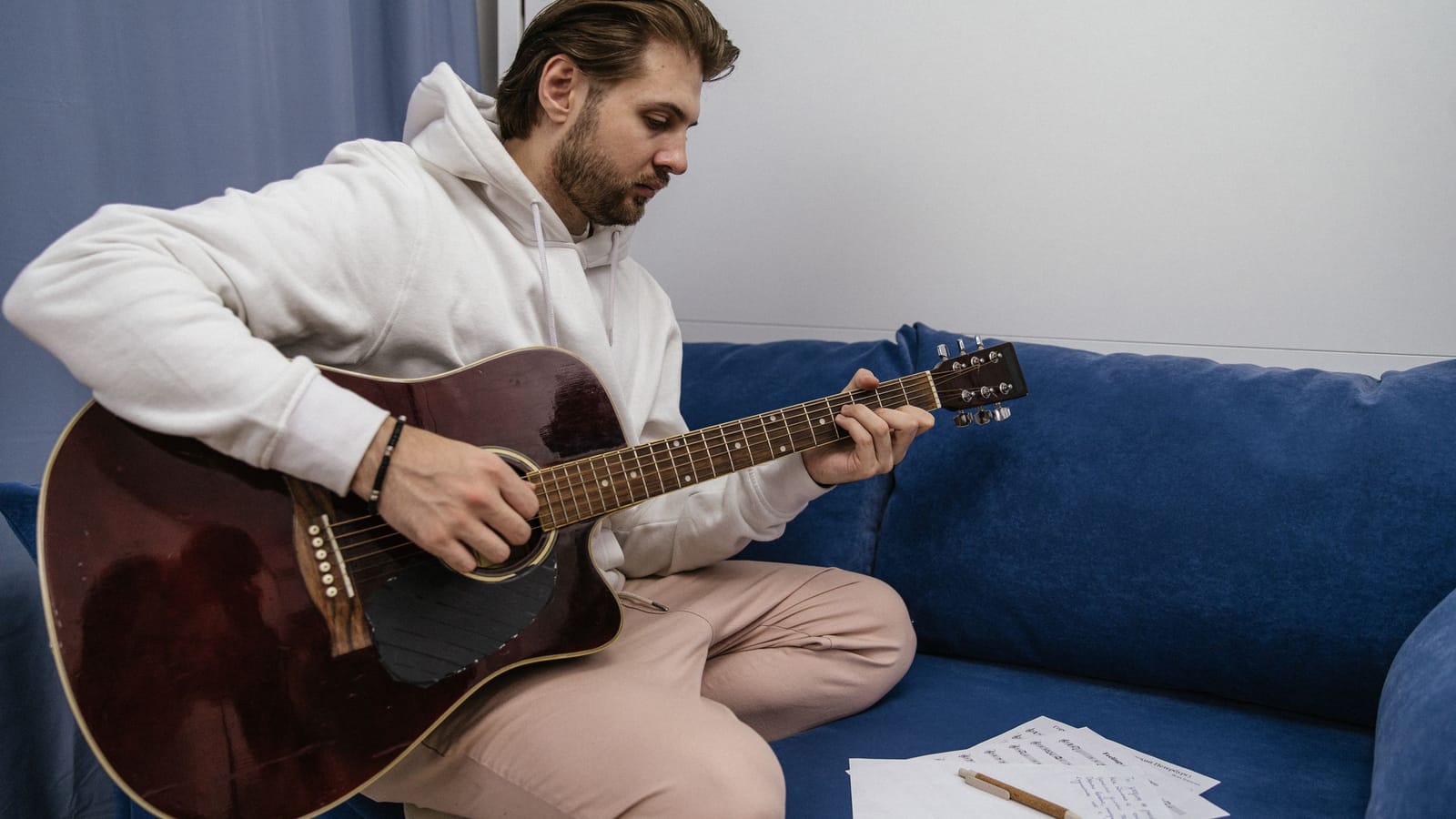
The claim and where it comes from
Few ideas about the brain are as appealing as this one. Learning an instrument draws on hearing, reading notation, fine motor control, memory and sustained attention, all at once. It seems natural that such a demanding activity would sharpen the mind in general.
The observation behind the claim is real. Expert musicians, like chess masters, appear on average to be more intelligent than the general population, and some researchers have taken this as a sign that learning music enhances children's cognitive abilities and school results [3]. Parents, schools and later adults deciding whether to take up the piano hear a version of this argument.
This review is about playing music. Listening to music before a test, the so-called Mozart effect, is a different claim with its own evidence, covered in Is the Mozart effect real?. How to practise an instrument well is covered in our method guide.
Two kinds of evidence
Almost everything in this debate turns on one distinction: comparing people who already play with people who do not, versus assigning people to lessons and seeing what changes.
| Kind of study | What it compares | What it can show | What it cannot show |
|---|---|---|---|
| Cross-sectional | Musicians versus non-musicians at one time | Whether the groups differ | Whether music caused the difference; children who take lessons often differ in family background, motivation and ability before they start |
| Longitudinal without random allocation | Children who chose music versus children who did not, over time | Change in each group | Whether the groups were comparable to begin with |
| Randomised with a passive control | Children assigned to music versus no activity | An effect of doing something new and engaging | Whether music itself matters, rather than any extra activity |
| Randomised with an active control | Children assigned to music versus another activity such as drama or sport | A specific effect of music | Long-term or adult effects, if the study was short or in children |
The further down the table, the stronger the inference. As the next sections show, the effects tend to get smaller as you move down it.
What correlational studies show
The difference between musicians and non-musicians is not in doubt [3]. The question is what produces it.
One clue comes from the baseline. In a 2022 meta-analysis of instrument programmes for children and adolescents, studies in which children selected the activity themselves showed a small advantage for the future music group before the programme had even begun (g = 0.28) [2]. The authors concluded that the link between instrumental training and cognitive skills involves both nature and nurture [2]. In other words, some of the musician advantage reflects who takes up music in the first place.
In older adults, a systematic review of 13 studies in healthy people aged 59 or over found cognitive and brain benefits associated with musical practice, in auditory perception and in some broader functions [5]. Nine of those 13 studies compared older musicians with non-musicians; only four tested short music-training programmes [5]. The authors described music as a promising tool for healthy ageing [5], which is a fair description of a small, mostly correlational evidence base, not a demonstration that starting lessons at 65 will change how you age. Our explainer on brain ageing and cognitive reserve discusses why that gap matters.
What randomised training shows
An early landmark trial. In 2004, Glenn Schellenberg randomly assigned 144 children to keyboard lessons, voice lessons, drama lessons or no lessons, and measured IQ before and after [6]. The two music groups' full-scale IQ scores rose slightly more than those of the control groups. The effect was relatively small, but it appeared across IQ subtests, index scores and a standardised test of academic achievement [6]. The drama group, unexpectedly, improved substantially in adaptive social behaviour, which the music groups did not [6]. This was a well-designed study, and it is one study.
Pooling the trials, version one. Sala and Gobet's 2020 multilevel meta-analysis combined 254 effect sizes from 54 studies with 6,984 children [1]. Once study design quality was controlled, the overall effect of music training on cognitive and academic outcomes was about zero, and highly consistent across studies [1]. Small significant effects (about 0.20) appeared only in studies that neither allocated children randomly nor used an active control group [1]. The null result held regardless of the type of outcome, the children's age or how long the training lasted, and the authors concluded that optimism about music training is empirically unjustified [1].
Pooling the trials, version two. Román-Caballero and colleagues took a narrower view, arguing that earlier meta-analyses relied on vague definitions of musical training [2]. They included only programmes that involved learning to play an instrument: 34 samples, 176 effect sizes and 5,998 children and adolescents, all in studies with a pre-test, a post-test and at least one control group [2]. They found a small but significant benefit (g = 0.26) for short-term programmes, whether or not the studies were randomised [2]. They also stressed that evidence from well-conducted studies is still scarce [2].
Why the meta-analyses disagree
These two analyses are not as far apart as their titles suggest. Both find that any effect is small. They differ in which studies count and in how they handle design quality.
- What counts as music training. One pooled a broad range of music programmes [1]; the other kept only instrument programmes [2].
- How quality is treated. One analysed design quality directly and found that the effect disappears in the best-designed studies [1]; the other found its small effect whether or not studies were randomised [2].
- The general pattern. Across music, chess and working-memory training, effect sizes on cognitive and academic skills shrink as experimental design improves, for example when an active control group is used [3]. Our reviews of chess and brain training find the same pattern.
A fair summary: a small benefit from instrument lessons in childhood is possible, but it has not survived the strictest comparisons, and a large, general effect is not supported by any of these analyses.
What practice clearly does improve
There is no controversy about the skill itself. Across 13 studies of 788 musicians, the amount of task-relevant practice people had accumulated correlated strongly with objectively assessed musical achievement (r = 0.61) [4]. That too is a correlation, not a trial, but it matches everyday experience: people who practise more play better. How much practice explains, and why it is not the whole story, is discussed in Is the 10,000-hour rule true? and in our guide to deliberate practice.
What the research says
What this means at LaserMind
LaserMind cannot teach you an instrument, and we do not claim that any game does what lessons do. We rate instrument learning as a real-world activity whose clear benefit is musical skill, with mixed evidence beyond music.
We do have one exercise that uses your ears. In Listen & Count, you hear a run of short beeps at two pitches and count only the high ones; harder levels bring the pitches closer together, and a Rhythm echo mode asks you to tap back a rhythm of 4 to 7 clicks. It practises picking out one kind of sound and ignoring another. It is not music training, and results depend on your device and your hearing, so compare them only with your own. If you are learning an instrument, the Deep Work Timer can hold you to a short daily session on one passage, which is the kind of regular practice our method guide recommends.
Try it on LaserMind
▶ Listen & CountCount the high beeps at level 1, then try Rhythm echo and tap the pattern back.
Try it on LaserMind
▶ Deep Work TimerSet 25 minutes for one passage of a piece and note each time your attention drifts.
What research has not established
- Nearly all the randomised trials were in children, and many programmes were short [1][2].
- Evidence in adults and older adults is small and mostly correlational [5].
- The two main meta-analyses used different inclusion rules, so their numbers are not directly comparable [1][2].
- The practice–achievement link comes from correlational studies of musicians [4].
- This review covers cognitive and academic outcomes. It does not assess enjoyment, social connection or other reasons people play.
Frequently asked questions
Does learning an instrument make children smarter? Not reliably. One early trial found slightly larger IQ gains after music lessons [6], but a meta-analysis of 54 studies found no effect once study quality was controlled [1], and the most positive meta-analysis reported a small effect [2].
Why do musicians score higher on cognitive tests? Partly because of who takes up music: children who chose music already scored slightly higher before lessons began [2]. Randomised trials have not shown that lessons produce the full difference [3].
Is it too late to learn as an adult? Not for learning to play. Practice is strongly linked with musical achievement [4]. Whether adult lessons change cognition more broadly has been little tested [5].
Is playing music better than listening to it? They are different claims. This review covers playing; listening is covered in our article on the Mozart effect.
What the research says
Last evidence check 2026-11-12Across 13 studies of 788 musicians, the amount of task-relevant practice was strongly linked with objectively assessed musical achievement; this is a correlation, not a training trial. Trained task [4]
Meta-analyses of music training in children disagree: one found no effect on cognitive or academic skills once study quality was taken into account, while another, limited to instrument programmes, found a small benefit and said well-conducted studies are still scarce. Other abilities [1][2]
References
- Sala, G., & Gobet, F. (2020). Cognitive and academic benefits of music training with children: A multilevel meta-analysis. Memory & Cognition, 48(8), 1429–1441. https://doi.org/10.3758/s13421-020-01060-2
- Román-Caballero, R., Vadillo, M. A., Trainor, L. J., & Lupiáñez, J. (2022). Please don't stop the music: A meta-analysis of the cognitive and academic benefits of instrumental musical training in childhood and adolescence. Educational Research Review, 35, 100436. https://doi.org/10.1016/j.edurev.2022.100436
- Sala, G., & Gobet, F. (2017). Does far transfer exist? Negative evidence from chess, music, and working memory training. Current Directions in Psychological Science, 26(6), 515–520. https://doi.org/10.1177/0963721417712760
- Platz, F., Kopiez, R., Lehmann, A. C., & Wolf, A. (2014). The influence of deliberate practice on musical achievement: A meta-analysis. Frontiers in Psychology, 5, 646. https://doi.org/10.3389/fpsyg.2014.00646
- Román-Caballero, R., Arnedo, M., Triviño, M., & Lupiáñez, J. (2018). Musical practice as an enhancer of cognitive function in healthy aging: A systematic review and meta-analysis. PLOS ONE, 13(11), e0207957. https://doi.org/10.1371/journal.pone.0207957
- Schellenberg, E. G. (2004). Music lessons enhance IQ. Psychological Science, 15(8), 511–514. https://doi.org/10.1111/j.0956-7976.2004.00711.x