The claim and where it comes from
The 10,000-hour rule says, roughly, that anyone can become world-class at almost anything with 10,000 hours of practice, about ten years of serious work. It became famous through Malcolm Gladwell's 2008 book Outliers, which devoted a chapter to the rule and cited a 1993 paper by the psychologist K. Anders Ericsson and colleagues as its main evidence [2].
The 1993 paper proposed the theory of deliberate practice. It argued that expert performance is the end result of prolonged effort to improve, that individual differences even among elite performers are closely related to the amount of deliberate practice they have done, and that many characteristics once thought to reflect innate talent result from intense practice over at least ten years [1]. Deliberate practice, in that framework, is not just time spent on an activity. It means effortful practice designed to improve specific weaknesses, usually set by a teacher, with feedback.
Gladwell's chapter turned a research finding into a memorable story, and it did a lot to make the idea of practice popular. But a popular summary and the research it draws on are not the same thing, so it is worth looking at what the original study measured.
What the original study measured
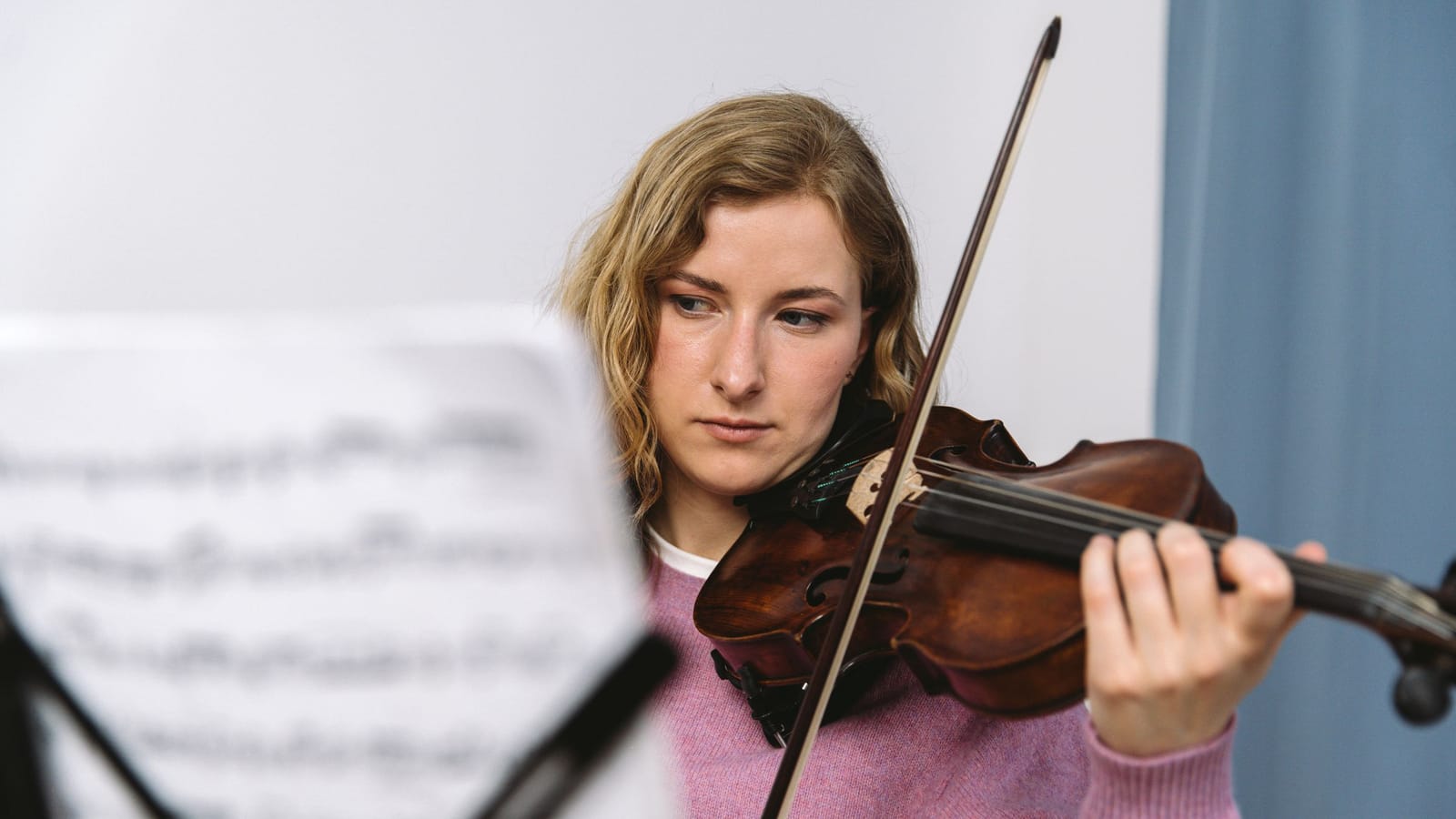
The best-known part of the 1993 paper studied violin students at a music academy in West Berlin. Faculty grouped them as the best students, good students and future music teachers, ten in each group [6]. The students estimated, looking back, how many hours a week they had practised alone in each year since they began, and the researchers added those estimates up [6]. They reported complete correspondence between the groups' skill levels and their average accumulated practice alone [6].
Several features of that design matter for the rule:
| What the rule says | What the study involved |
|---|---|
| 10,000 hours makes you an expert | Accumulated hours were averages for groups, compared by skill level; no threshold was tested |
| Anyone, in any field | 30 students already admitted to an elite academy, in one domain |
| Any kind of practice | Practice alone, the kind the students and researchers judged most relevant to improving |
| Hours cause expertise | Retrospective estimates in a cross-sectional comparison, which cannot show cause on their own |
Ericsson later wrote that, although the research showed that an extended period of training was needed for international-level performance, there was no evidence for a magical number; he estimated that winning international piano competitions would take something closer to 25,000 hours [2]. He also pointed out that Outliers never used the term deliberate practice, and that its examples counted activities such as public performance and paid work that do not meet the definition [2].
What later research found
How much practice explains. In 2014, Macnamara, Hambrick and Oswald pooled studies across games, music, sports, education and professions that had measured both accumulated practice and performance. They originally reported that deliberate practice explained 26% of the variance in performance for games, 21% for music, 18% for sports, 4% for education and less than 1% for professions [3]. In 2018 the authors published a corrigendum after finding an error in how they had adjusted for dependent effect sizes [4]. With the corrected figures, deliberate practice explained about 14% of the differences in performance overall, about a quarter in games and music, a fifth in sports, 5% in education and 1% in professions [4]. Their conclusion did not change: practice is important, but not as important as had been argued [3].
Sports and elite performers. A follow-up meta-analysis in sports found that deliberate practice accounted for 18% of the variance in performance overall, but only 1% among elite performers [7]. Athletes who reached a high level had not started their sport earlier in childhood than less skilled athletes [7]. In other words, practice separated beginners from good club athletes much better than it separated the very best from the rest.
How many hours. A study of 104 chess players in Argentina asked them to estimate their practice over their careers [5]. Among the 34 who reached master level, the average was about 11,000 hours of total practice, close to the popular figure, but the range ran from about 3,000 to more than 23,000 hours, and some players with over 25,000 hours had not reached master level [5]. The authors concluded that practice is a necessary but not a sufficient condition for expertise [5].
The replication. In 2019, researchers repeated the violin study at a US conservatory, keeping the method but making it double-blind, so that interviewers did not know students' skill groups and students did not know the purpose of the study [6]. By age 20, both the best and the good violinists had averaged more than 10,000 hours of practice alone [6]. But the core finding did not replicate: the best and good groups did not differ significantly in accumulated practice, and practice explained 26% of the variance in performance rather than the 48% in the original study [6]. The authors stressed that 26% is not an inconsequential amount; it is simply far from explaining most of the differences [6].
Ericsson's reply: what counts as deliberate practice?
Ericsson did not accept these estimates. In a 2019 paper, he and Kyle Harwell argued that many studies in the meta-analyses measured practice activities that did not meet the original definition, individualised solitary practice guided by a teacher [2]. When they reanalysed only the studies they judged to fit the definition, practice explained about 29% of the variance in performance, or 61% after correcting for unreliable measurement, against the 14% in the corrected meta-analysis [2].
A separate meta-analysis in music, which looked at task-relevant practice, also found a strong correlation between accumulated task-relevant practice and objectively assessed achievement (r = 0.61 across 13 studies with 788 musicians) [8]. On the other side, the 2019 replication found that the teacher-designed practice Ericsson emphasised did not explain more variance than practice alone [6]. The dispute is real and unresolved. What neither side defends is the popular rule itself.
Where the two sides agree
Strip away the number and the disagreement narrows considerably.
- Practice is necessary. No study suggests that people reach high levels in chess, music or sport without years of work [5][1].
- Quality matters more than clock time. The original theory was about a specific kind of practice, not about logging hours [2], and in chess the strongest predictor of rating was serious study alone [9].
- People differ in how much they gain per hour. The spread of hours to master level in chess, and the small share of variance explained among elite athletes, both point to other factors at work [5][7].
- The figures are correlations. Almost all of this evidence comes from people's own estimates of past practice, compared across skill levels. It tells you what goes with expertise, not exactly how much more practice will add for you.
What the research says
What this means at LaserMind
Our Deliberate Practice method page describes the practice the research is about: one specific weakness at a time, a task just beyond your current level, feedback, and repetition. None of that requires counting to 10,000. It requires knowing what you are practising and checking whether it is improving.
Two tools help with the parts that hours alone miss. The Deep Work Timer asks you to pick one real task and a length of 25, 50 or 90 minutes, and to tap a button each time your mind wanders and return to the task. Reflection gives you two short questions a day and a weekly check-in, to see whether practice is carrying over to the real work you care about.
If you use our games, keep the same caution in mind: getting better at a game is real practice on that game. Our guide to measuring progress in brain training explains how to tell practice on a task from change outside it, and How to train your brain puts deliberate practice alongside other habits with good evidence.
Try it on LaserMind
▶ Deep Work TimerChoose one skill you are working on, set 25 minutes, and count how often you drift away from it.
Try it on LaserMind
▶ Reflection PromptsAt the end of the week, write down one thing that improved in the real task, not just in practice.
What research has not established
- Nearly all the evidence is correlational and relies on people's own estimates of how much they practised, sometimes over decades.
- The meta-analyses mix domains with very different ways of measuring performance, from chess ratings to job ratings, so a single percentage hides a lot of variation [3].
- The debate between the two main camps is ongoing, and Ericsson's reanalysis and the meta-analysis authors' estimates rest on different study selections [2].
- This page is about skilled performance in domains such as music, games and sports. It does not address whether practice changes general cognitive abilities, which is a separate question.
Frequently asked questions
Where does the number 10,000 come from? From the 1993 study of violin students, popularised by Outliers. In a later replication, both top groups of violinists had averaged more than 10,000 hours of practice alone by age 20 [6], but the original authors never proposed it as a threshold [2].
Did Gladwell get it wrong? He drew attention to something real: high performance usually rests on years of practice. Ericsson's objection was that the book treated a group average as a magic number and counted kinds of activity that the theory did not include [2].
If practice explains only part of performance, what explains the rest? The research does not give a full answer. Factors researchers have examined include the age at which people start, individual differences in abilities, body size in some sports, and how performance is measured [5][7][2].
Is it still worth practising? Yes. Practice was related to performance in every domain studied, most clearly in games, music and sports [4]. The lesson is to practise well and check your progress, not to count hours.
What the research says
Last evidence check 2026-11-12The deliberate-practice framework: expert performance reflects years of focused practice on weaknesses, with feedback. Trained task [1]
References
- Ericsson, K. A., Krampe, R. T., & Tesch-Römer, C. (1993). The role of deliberate practice in the acquisition of expert performance. Psychological Review, 100(3), 363–406. https://doi.org/10.1037/0033-295X.100.3.363
- Ericsson, K. A., & Harwell, K. W. (2019). Deliberate practice and proposed limits on the effects of practice on the acquisition of expert performance: Why the original definition matters and recommendations for future research. Frontiers in Psychology, 10, 2396. https://doi.org/10.3389/fpsyg.2019.02396
- Macnamara, B. N., Hambrick, D. Z., & Oswald, F. L. (2014). Deliberate practice and performance in music, games, sports, education, and professions: A meta-analysis. Psychological Science, 25(8), 1608–1618. https://doi.org/10.1177/0956797614535810correction
- Macnamara, B. N., Hambrick, D. Z., & Oswald, F. L. (2018). Corrigendum: Deliberate practice and performance in music, games, sports, education, and professions: A meta-analysis. Psychological Science, 29(7), 1202–1204. https://doi.org/10.1177/0956797618769891
- Gobet, F., & Campitelli, G. (2007). The role of domain-specific practice, handedness, and starting age in chess. Developmental Psychology, 43(1), 159–172. https://doi.org/10.1037/0012-1649.43.1.159
- Macnamara, B. N., & Maitra, M. (2019). The role of deliberate practice in expert performance: Revisiting Ericsson, Krampe & Tesch-Römer (1993). Royal Society Open Science, 6(8), 190327. https://doi.org/10.1098/rsos.190327
- Macnamara, B. N., Moreau, D., & Hambrick, D. Z. (2016). The relationship between deliberate practice and performance in sports: A meta-analysis. Perspectives on Psychological Science, 11(3), 333–350. https://doi.org/10.1177/1745691616635591
- Platz, F., Kopiez, R., Lehmann, A. C., & Wolf, A. (2014). The influence of deliberate practice on musical achievement: A meta-analysis. Frontiers in Psychology, 5, 646. https://doi.org/10.3389/fpsyg.2014.00646
- Charness, N., Tuffiash, M., Krampe, R., Reingold, E., & Vasyukova, E. (2005). The role of deliberate practice in chess expertise. Applied Cognitive Psychology, 19(2), 151–165. https://doi.org/10.1002/acp.1106