Chess Strategic Games
Evidence for: chess skill; far transfer unproven
In chess strategy practice you study a position, work out the checks, captures and threats, predict the next two or three moves and compare your plan with the best line. It practises calculating ahead and weighing options on the board. Serious study builds chess skill; benefits beyond the board have not held up in better-designed studies, so play it because you enjoy it and want to get better at chess.
Who it suits
A good fit if you
- enjoy chess or another strategy game and want to get better at it
- like puzzles with a clear answer you can check afterwards
- want a demanding hobby with endless material, from beginner puzzles to master games
- are happy to review your own games, not only play new ones
Take care or choose something else if
- you hope chess will make you smarter or protect your memory: research has not shown benefits beyond the board
- you are choosing chess for a child mainly to raise school results: better-designed studies cast serious doubt on that
- you tend to play fast online games for hours: it is easy to lose sleep, so set limits
- losing upsets you a lot: puzzles and slow review are calmer than rated games
How to practise
- Choose material slightly above your levelUse a puzzle book, a free puzzle site or positions from your own games. Pick puzzles you solve roughly half to two-thirds of the time; easier ones teach little, and much harder ones turn into guessing.
- Scan before you moveBefore touching a piece, list every check, capture and threat for both sides. This habit catches many simple tactics and blunders, and with practice it takes less than a minute.
- Calculate two or three moves aheadChoose a candidate move, then work out your opponent’s best reply and your next move, in your head and without moving pieces. Write the line down with a short reason for each move.
- Compare with the solutionCheck the answer or an engine only after you have committed to a line. Note what you missed: a tactic, a defence or a better plan. Seeing why your line fails teaches more than the right answer alone.
- Play slower gamesPlay games with enough time to think, for example 15 minutes or more per side, against a person or an app. Fast games are fun but leave little room for calculation.
- Review every serious gameAfter a game, go through it yourself first and mark the moments you were unsure. Then check with an engine or a stronger player, and write down one lesson per game.
- Make time for solo studySet aside part of each week for focused study on your own: puzzles, basic endgames, or a master game with notes where you guess each move before you look.
How much and how often
- Per session
- 15–30 minutes of puzzles or review, or one slower game plus a short review.
- Per week
- 3–4 sessions, mixing puzzles with at least one slower game and its review.
- When to make it harder
- When you solve most puzzles at a level, move up. Lengthen your calculation from two moves to three, then to longer forcing lines.
A four-week starting plan
- Week 1Puzzles only, 15 minutes a session. Practise the scan before every answer: checks, captures and threats for both sides.
- Week 2Puzzles plus one slower game, reviewed on your own before you check with an engine.
- Week 3Add one theme, such as basic endgames or an opening you play, and keep up puzzles and one reviewed game.
- Week 4Keep the mix. Look back over your notes: which kind of mistake do you make most, and what will you study next?
A sample session
- 0–2 minSet up a board or open your puzzle source. Turn notifications off.
- 2–17 minFive to eight puzzles. For each one: scan checks, captures and threats, write your line, then check.
- 17–20 minGo back over the puzzles you missed and play through the correct line on the board.
- 20–28 minTake one position from your last game where you were unsure. Decide your move before checking it.
- 28–30 minOne line in your notes: puzzles solved, the main thing you missed, one lesson to remember.
Beginner, intermediate and advanced
Beginner
How the pieces move and basic checkmates, then one- and two-move puzzles. Goal: the scan before every move.
Intermediate
Puzzles three moves deep, a slower game each week, basic endgames, and a review of every serious game.
Advanced
Long calculation, annotated master games where you guess each move, opening preparation and deeper endgames. Keep study time ahead of fast-game time.
How to track your progress
- Record puzzles attempted and solved at a similar difficulty, so you compare like with like.
- Note the type of each mistake: missed tactic, missed defence or weak plan. Fewer simple blunders is real progress.
- If you play rated games, look at your rating over months, not days. It moves up and down with form and opponents.
- Read all of this as progress in chess. It is not a measure of intelligence, and getting better at chess does not mean your planning at work or school improves with it.
Common mistakes
- Moving quickly and checking the answer without calculatingCommit to a written line before you look. Guessing and checking feels busy but teaches little.
- Asking the engine before thinking it throughReview on your own first, then use the engine to check. Its moves make more sense once you have struggled with the position.
- Only playing fast gamesFast games are fine for fun, but give at least one game a week enough time to calculate, and review it.
- Ignoring your opponent’s threatsMake the scan two-sided every time: what does my opponent want to do next?
- Expecting chess to improve other skillsEnjoy it for itself. Better-designed studies cast serious doubt on benefits beyond the board.
What builds chess skill has been studied in tournament players. In two large samples of rated players, the amount of serious solo study they reported was the strongest predictor of their chess rating. That fits the advice on this page: puzzles, review and focused study, not only playing.
Benefits beyond the board are a different matter. Meta-analyses of chess instruction for children found small-to-moderate benefits for cognitive and academic skills, but the better designed the study, the smaller the effect, which casts serious doubt on any real benefit. LaserMind therefore presents chess as a worthwhile game to get better at, not as brain training.
What the research says
Last evidence check 2026-10In two large samples of rated tournament players, the amount of serious solo study they reported was the strongest predictor of their chess rating. Trained task [1]
Meta-analyses of chess instruction for children found small-to-moderate benefits for cognitive and academic skills, but the better designed the study, the smaller the effect, which casts serious doubt on any real benefit. Other abilities [2]
References
- Charness, N., Tuffiash, M., Krampe, R., Reingold, E., & Vasyukova, E. (2005). The role of deliberate practice in chess expertise. Applied Cognitive Psychology, 19(2), 151–165. https://doi.org/10.1002/acp.1106
- Sala, G., & Gobet, F. (2017). Does far transfer exist? Negative evidence from chess, music, and working memory training. Current Directions in Psychological Science, 26(6), 515–520. https://doi.org/10.1177/0963721417712760
Safety
Chess is safe, but long sessions can be tiring. Take breaks, look away from the board or screen now and then, and keep online play in balance with sleep, exercise and time with other people. Losing streaks are normal; step away if frustration builds. If gaming of any kind starts to crowd out sleep, work or relationships, talk to someone you trust or a professional. Chess is not a way to check your memory: if you are worried about it, see a doctor.
Frequently asked questions
Will chess make me smarter?
It will make you better at chess. Meta-analyses of chess instruction for children found benefits for other skills that shrank as study quality improved, which casts serious doubt on real benefits beyond the board.
Should I play or study?
Both, but do not skip study. Among rated players, serious solo study was the strongest predictor of rating. A simple mix is puzzles in most sessions plus one slower game a week, reviewed.
Is it fine to use a chess engine?
Yes, after you have thought it through. Use it to check your line and your reviewed games, not to choose your moves for you.
Do other strategy games count?
The same habits work in go, shogi, xiangqi and similar games: scan threats, calculate a few moves, compare and review. The evidence on this page is about chess.
Related methods
How to practise
Guided practice
Practise with the steps on this page — no app needed.
Log it in ReflectionRelated reading
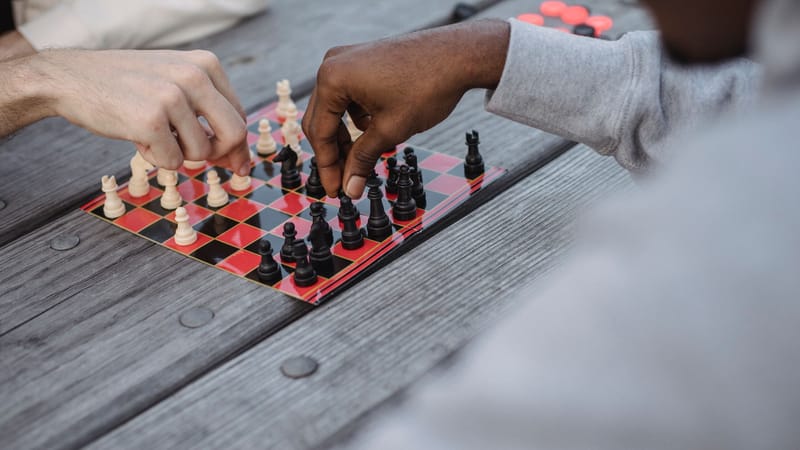
Myth check
Does Chess Make You Smarter? What the Evidence Shows
Chess players score higher on cognitive tests, but teaching chess has not been shown to raise intelligence or school results. What the trials found.
Myth check
Is the 10,000-Hour Rule True? What Practice Research Shows
The 10,000-hour rule grew from a 1993 violin study. What that study found, what later meta-analyses and a replication showed, and what practice explains.