EEG Neurofeedback
Evidence for: unclear vs sham in healthy people
EEG neurofeedback records your brain’s electrical activity with sensors on the scalp and turns chosen patterns into feedback, such as a sound or a moving image, so you can learn to shift those patterns. In healthy adults it gave a small overall improvement on attention tests, but no significant benefit in trials that compared it with sham (fake) feedback. In children and teenagers with ADHD, improvements appeared only in the least blinded ratings, so the case for it is weak.
Who it suits
A good fit if you
- you are curious how neurofeedback works and what the research says
- you have seen a focus headband or a clinic advertising neurofeedback and want to read the claims critically
- a clinician has mentioned it and you want good questions to ask
Take care or choose something else if
- you want a quick fix for focus at work or study: trials against sham feedback did not show a clear benefit
- you are considering it for a child’s attention problems: talk to the child’s doctor first about the established options
- you have epilepsy, a brain injury or a mental-health condition: any neurofeedback should be with a professional who knows your history
- you would be paying for a long course of sessions on the strength of testimonials
What to know before you consider it
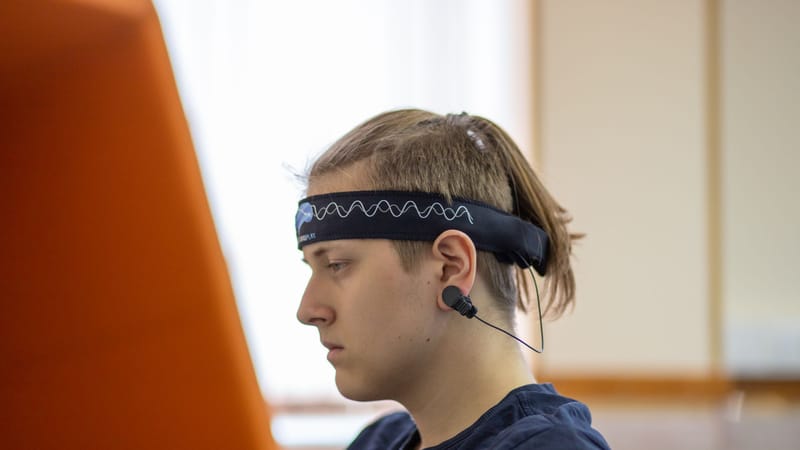
- Know what it isSensors on the scalp pick up tiny electrical signals from the brain (EEG). Software looks for chosen patterns and rewards you when they move in the target direction, for example a video plays smoothly or a tone sounds. Over sessions, you are meant to learn to produce more of that pattern.
- Know that it only recordsEEG neurofeedback sends nothing into the brain. It is different from brain-stimulation methods such as tDCS or TMS, which are separate clinical treatments.
- Expect what a clinic session involvesSensors are placed on your head, sometimes with a little gel, and you watch or listen to the feedback for a set time while sitting still. Programmes usually involve many sessions.
- Know who provides itSome psychologists, clinics and private neurofeedback practitioners. Training and regulation vary a lot between countries, so ask about qualifications and about what they will measure.
- Understand cost and access in general termsClinic programmes can be expensive because they involve many sessions, and they are often not covered by insurance. Consumer headbands cost less and use fewer, simpler sensors.
- Separate what was studied from what is soldStudies use set training targets and careful controls. A headband’s “focus score” or “calm score” is the device’s own reading of a signal; it does not show that your attention has changed.
- Know why sham feedback mattersFeeling more focused can come from expectation, a practitioner’s attention or simply resting in a quiet room. Sham feedback looks the same but is not linked to your brain, so only a difference from sham shows that the feedback itself does something.
Questions to ask before you try it
- Has this approach been tested against sham feedback, not only against doing nothing?
- Which condition was it tested for, and is that my situation?
- How many sessions, at what total cost, and how will we decide whether it is working?
- Who rates the improvement: me, a parent who knows about the training, or an assessor who does not?
- Which established options should I try or discuss first?
Common misconceptions
- Seeing my brain signal on screen means I am training itSeeing a signal is not the same as training it effectively. In healthy adults, trials against sham feedback showed no significant benefit.
- A headband can make me focus on demandA focus score is the device’s reading of a signal. It does not switch your attention on.
- Parents saw improvement, so it works for ADHDImprovement showed up only in ratings by the least blinded assessors. With probably blinded ratings, and in sham-controlled trials, effects were not significant.
- It is a kind of brain stimulationNeurofeedback only records. Stimulation methods are a separate, clinical topic with their own risks.
- More sessions must help moreWhen sham-controlled trials show no clear benefit, more sessions mainly add cost and time.
In healthy adults, a review found that neurofeedback gave a small overall improvement on attention tests. But in the eight trials that compared it with sham feedback, there was no significant benefit. Sham comparisons are the fairest test, so it is unclear whether the feedback itself helps.
In children and teenagers with ADHD, a review found that symptoms improved only when rated by the least blinded assessors, the people most likely to know who had the training. With probably blinded ratings, or in sham-controlled trials, the effects were not significant.
What the research says
Last evidence check 2026-10In healthy adults, neurofeedback gave a small overall improvement on attention tests, but no significant benefit in the eight trials that compared it with sham feedback. Trained & similar tasks [1]
In children and teenagers with ADHD, neurofeedback improved symptoms only when rated by the least blinded assessors; effects were not significant with probably blinded ratings or in sham-controlled trials. Health [2]
References
- Kimura, I., Noyama, H., Onagawa, R., Takemi, M., Osu, R., & Kawahara, J. (2024). Efficacy of neurofeedback training for improving attentional performance in healthy adults: A systematic review and meta-analysis. Imaging Neuroscience, 2, imag-2-00053. https://doi.org/10.1162/imag_a_00053
- Cortese, S., Ferrin, M., Brandeis, D., et al. (2016). Neurofeedback for attention-deficit/hyperactivity disorder: Meta-analysis of clinical and neuropsychological outcomes from randomized controlled trials. Journal of the American Academy of Child & Adolescent Psychiatry, 55(6), 444–455. https://doi.org/10.1016/j.jaac.2016.03.007
Safety
EEG neurofeedback records signals; it does not send anything into your brain. Some people feel tired, get a headache or feel unsettled after sessions; tell the practitioner if this happens. Do not use it in place of a medical or psychological assessment if you are worried about attention, mood or sleep, and do not change prescribed treatment because of a device or a practitioner’s advice without speaking to your doctor. This page is not medical advice.
Frequently asked questions
Does neurofeedback improve attention?
In healthy adults there was a small overall effect on attention tests, but no significant benefit against sham feedback. So it is unclear whether the feedback itself helps.
Is it a good option for ADHD?
In children and teenagers, improvements appeared only in the least blinded ratings. Ask a doctor about the options with stronger evidence.
Are consumer focus headbands worth buying?
They show a reading of a signal. If you buy one, treat it as a gadget, not as a tested way to improve attention.
What can I do instead?
Low-cost practices you can do yourself, such as focused-attention meditation or single-tasking with a timer. LaserMind’s sustained attention exercise lets you practise one attention task, with the usual limit that gains stay close to that task.
Related methods
ⓘ Learn only
Learn only: this page summarises what the research says. There is no LaserMind exercise for it.
Related reading
Research review
Does tDCS Improve Cognition? What the Research Shows
In healthy adults, tDCS shows no reliable effect on memory or thinking, and its studies look underpowered. What trials, clinical guidelines and DIY warnings say.
Common myths
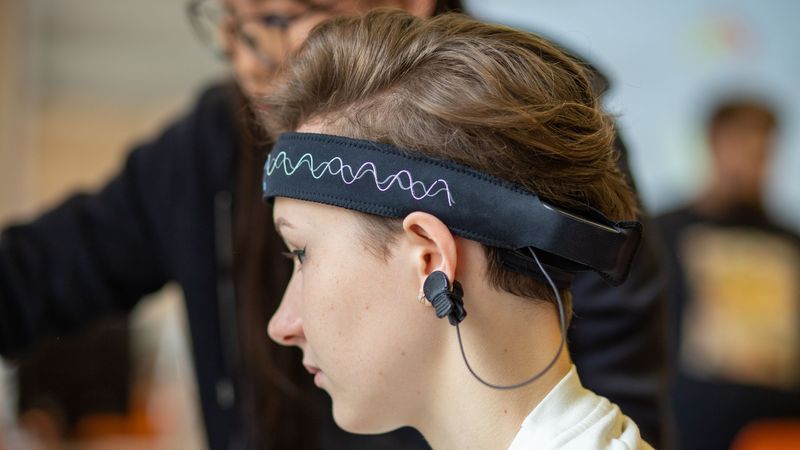
Does Neurofeedback Work? What the Research Shows
In healthy adults, neurofeedback's small gains on attention tests disappear against sham feedback. What trials, ADHD research and placebo effects show.