Focused Attention Meditation
Evidence for: attention control (small, inconsistent)
Focused attention meditation means resting your attention on one anchor, usually the feeling of the breath, and kindly bringing it back each time your mind wanders. It is the basic sitting practice behind many meditation styles and trains attention control: noticing that you have drifted, and returning. The evidence is mixed: some meta-analyses find small-to-moderate gains on some attention and executive-function measures, others find small or no effects, and gains tend to be smaller in healthy people.
Who it suits
A good fit if you
- want a simple daily practice for steadying attention that needs no equipment
- like starting with 5 minutes and building up slowly
- want to notice sooner when your mind has drifted, at your desk as well as when sitting
- prefer a calm practice to a fast timed exercise
Take care or choose something else if
- you have a history of trauma or panic, or a current mental-health condition: start gently, with eyes open, or with a qualified professional
- you are hoping it will treat anxiety, depression or another condition: it is not a treatment; talk to a doctor or therapist
- watching the breath makes you anxious or short of breath: choose a different anchor, such as sounds or your feet on the floor
- you want a score that goes up: there is none, so you judge it by your own notes
How to practise
- Choose a time and a placePick the same time each day and a seat where nobody will interrupt you for 5–10 minutes. Silence your phone. A regular slot matters more than a perfect setting.
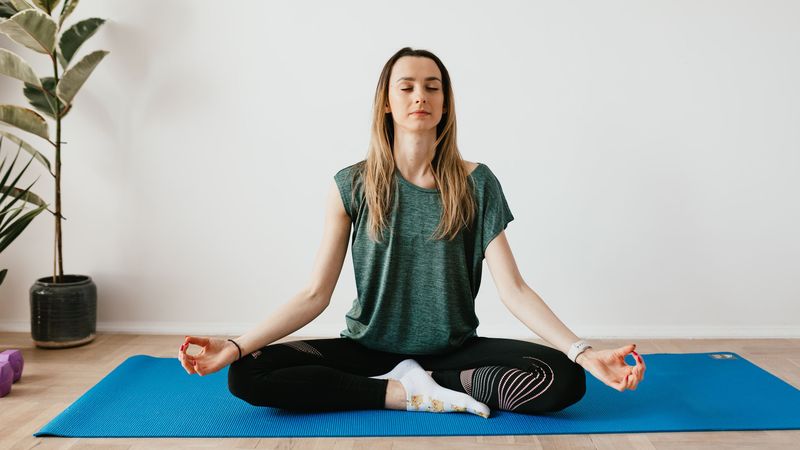
- Sit upright but relaxedFeet on the floor, back upright but not stiff, hands resting. Close your eyes or rest your gaze softly on the floor ahead; eyes open is fine and often easier at first.
- Let the breath be naturalDo not slow, deepen or hold the breath. You are watching it, not controlling it.
- Pick one anchorChoose one place to feel the breath: the nostrils, the chest or the belly. If watching the breath is uncomfortable, use sounds or your feet on the floor instead. Keep the same anchor for the whole sit.
- Notice when you have wanderedSooner or later you will find yourself planning or replaying a conversation. That moment of noticing is the exercise. Some people quietly note “thinking” before they return.
- Come back kindly, every timeReturn to the anchor without criticising yourself. You may wander dozens of times in five minutes; each return is one repetition, not a failure.
- End slowlyWiden attention to the whole body, then open your eyes and move gently before you reach for your phone.
- Use a site tool as supportGuided Sessions has a spoken “Focused attention on the breath” session of about 5 minutes. To see how often you drift, the Breath Counter lets you tap on each out-breath and press “I lost count”; that technique has its own page, Breath Counting.
How much and how often
- Per session
- 5 minutes to start; 10–20 minutes once 5 feels easy.
- Per week
- Most days, ideally at the same time. If you miss a day, just sit the next.
- When to make it harder
- Add 2–3 minutes after a week of sitting without strain. There is no need to go beyond about 20 minutes.
A four-week starting plan
- Week 15 minutes a day, guided or with a timer. Learn the posture and the return.
- Week 25–8 minutes, partly unguided. Find the easiest anchor and stay with it.
- Week 38–12 minutes, plus one short informal practice a day, such as three breaths before opening email.
- Week 410–15 minutes. Read your notes and decide what length and time of day suit you.
A sample session
- 0–1 minSit down, silence your phone, set a timer or start the guided session. Check your posture once.
- 1–2 minSettle: feel your feet, seat and hands. Let the breath find its own pace.
- 2–9 minRest on your anchor. Each time you notice you have drifted, note it lightly and come back.
- 9–10 minWiden attention to the whole body, then open your eyes slowly.
- 10–11 minOne line in your notes: minutes, anchor, how often you drifted (often, sometimes, rarely).
One anchor, with room to notice wandering
In this invented example, choose the sensation of natural breathing at the nose as the anchor. There is no need to change the pace or depth of breathing.
You notice that you have been rehearsing a conversation. What is the next step in this focused-attention instruction?
Check the next step
Recognise that attention wandered and return to the chosen breath sensation. Noticing wandering is part of following the instruction; it is not a reason to force thoughts away or restart a timer.
When would the instruction be different?
In open monitoring, you would notice the experience occurring now without fixing attention on a single selected object. The linked comparison uses the same imagined sound and thought for both styles. One short attempt, or a feeling of calm, cannot show which style improves attention more.
Beginner, intermediate and advanced
Beginner
5 minutes with the spoken guided session, or eyes open with a timer. Goal: sit through it and practise returning kindly.
Intermediate
10–15 minutes unguided, the same anchor each day, plus short returns during the day (in a queue, before a meeting).
Advanced
15–20 minutes, with an occasional Breath Counter session as a check. Keep the same gentle attitude; longer is not automatically better.
How to track your progress
- Log minutes, anchor and a rough drift rating after each sit; the site keeps no score for this practice.
- For a number, do one Breath Counter session a week in the same mode and note how many times you noticed drifting. A higher count can mean you have got better at noticing.
- Look at the trend over several weeks, not single sits. Sleep, stress and time of day all change how a session feels.
- Check daily life too, for example how quickly you notice drifting while reading or working. A calm sit is pleasant, but it is not the same as better attention at work.
Common mistakes
- Trying to empty the mindYou do not need to stop thoughts. The practice is noticing them and coming back.
- Judging yourself for wanderingWandering is expected. Count each return as a repetition.
- Controlling the breathLet it be natural; if you catch yourself steering it, let go and watch.
- Switching anchors during a sitPick one anchor at the start and stay with it, so that returning has one clear place to go.
- Judging it only by how calm you feltRestless sits are still practice. Judge it by regularity and by what you notice in daily life over weeks.
Most research looks at mindfulness programmes, where focused attention is a core practice, not at this exercise alone. A meta-analysis of 111 randomised trials found small-to-moderate effects on several attention and executive-function measures, but not on speed, and the effects were larger in people with psychiatric symptoms than in healthy people.
Another meta-analysis of randomised trials in adults found only small effects overall: benefits for executive function and working memory, but not for attention, and no advantage over active comparison programmes. Taken together, the evidence is conditional: treat this as practice in noticing and returning, and judge it by your own notes.
What the research says
Last evidence check 2026-10A meta-analysis of 111 randomised trials found that mindfulness programmes had small-to-moderate effects on several attention and executive-function measures, but not on speed; effects were larger in people with psychiatric symptoms than in healthy people. Trained & similar tasks [1]
Another meta-analysis of randomised trials in adults found only small effects overall, benefits for executive function and working memory but not for attention, and no advantage over active comparison programmes. Trained & similar tasks [2]
References
- Zainal, N. H., & Newman, M. G. (2024). Mindfulness enhances cognitive functioning: A meta-analysis of 111 randomized controlled trials. Health Psychology Review, 18(2), 369–395. https://doi.org/10.1080/17437199.2023.2248222
- Whitfield, T., Barnhofer, T., Acabchuk, R., et al. (2022). The effect of mindfulness-based programs on cognitive function in adults: A systematic review and meta-analysis. Neuropsychology Review, 32(3), 677–702. https://doi.org/10.1007/s11065-021-09519-y
Safety
Never hold or force the breath. If you feel dizzy, panicky or distressed, or difficult memories come up, open your eyes, breathe normally and stop; try again another day with eyes open or a shorter sit. Some people, for example with a history of trauma or panic or a current mental-health condition, find inward-focused practice unsettling and do better starting gently or with a qualified professional. This is not a treatment for anxiety, depression or any other condition; if you are struggling, talk to a doctor.
Frequently asked questions
How is this different from Breath Counting?
Focused attention is the general practice: rest on an anchor and return. Breath Counting is one specific technique within it, where you count out-breaths from 1 to 10 so that drifting shows up as a lost count.
My mind wanders all the time. Am I doing it wrong?
No. Constant wandering is normal, especially at first. Each time you notice and return, you have done one repetition.
Eyes open or closed?
Either. Closed eyes can make the breath easier to feel; open eyes resting on the floor can feel steadier, especially if closing them is uncomfortable.
Will it improve my concentration at work?
It may help some people a little, but the research is mixed and gains are smaller in healthy people. Track something concrete, such as how quickly you notice drifting at work.
Related methods
Related reading

Meditation explained
Focused Attention vs Open Monitoring Meditation: Key Differences
How focused-attention and open-monitoring meditation differ, what head-to-head studies found, why the evidence on attention is mixed, and how to try both.

Attention explained
What Is Mind Wandering? How Common It Is and What It Costs
What mind wandering is, how researchers measure it, why minds drift in almost half of waking moments, and what links it to mood and performance.
Research review
Does Meditation Improve Attention? What the Research Shows
What meta-analyses found about meditation and attention: small gains on some lab measures, mixed results against active controls, and open questions.