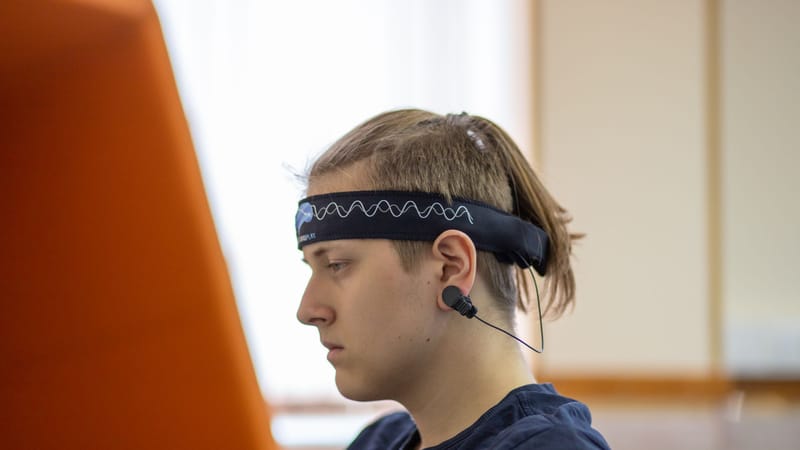
tDCS / tACS
Evidence for: not established; do not DIY
tDCS and tACS pass a weak electrical current between electrodes on the scalp: a steady current in tDCS, an alternating one in tACS. They are research and clinical tools, used by qualified teams for specific purposes. In healthy adults, studies of thinking and memory show at most small effects that may not hold up, so they are not a way to improve your mind at home. LaserMind does not recommend, provide or endorse them.
Who it suits
A good fit if you
- you are curious what the research on electrical brain stimulation actually says
- you have been invited to take part in a study and want to understand what it involves
- a clinician has mentioned it as part of treatment for a specific condition and you want to prepare questions
- you have seen a consumer headset advertised and want to judge its claims
Take care or choose something else if
- you are thinking of buying, building or borrowing a device to use on yourself: do not; this page explains why
- you hope it will sharpen focus, memory or study results: research in healthy people has not established this
- you have a neurological or psychiatric condition, or any implant: whether stimulation is suitable is a decision for a treating clinician
- you are looking into it for a child or teenager: it belongs only in specialist research or clinical care
What to know before you consider it
- Know what it isElectrodes, usually inside damp sponges, are placed on the head and a weak current flows between them for a set time. tDCS uses a steady current; tACS uses one that alternates at a chosen rhythm. The aim is to nudge how easily nerve cells below become active, not to make them fire directly.
- Know where it is usedMost tDCS and tACS work happens in research studies with ethics approval. Depending on the country, some clinics use tDCS for specific conditions, always under medical supervision. It is not a general wellness service.
- Know what a session involvesIn a study or clinic, staff check whether you can take part, place and test the electrodes, and stay with you during stimulation. People often feel tingling, itching or warmth under the electrodes. The team decides every setting; the participant does not.
- Know who provides itLook for a named research group at a university or hospital, or a clinic led by a physician or other licensed clinician. A proper study gives you written information, asks for informed consent and lets you withdraw at any time.
- Know how access and cost workTaking part in research is usually free. Clinical use, where it exists, is arranged through a specialist, and coverage by insurance or public health services varies. Anyone selling stimulation sessions without a medical assessment is a warning sign.
- Separate what was studied from what is soldStudies test specific setups in specific groups under controlled conditions, often against sham (fake) stimulation. Consumer headsets sold for focus, gaming, meditation or learning are a different thing. A lab result does not carry over to a home device used without supervision.
- Read the marketing criticallyBe wary of “boost” or “unlock” language, “clinically proven” with no named study, before-and-after testimonials, research done on a different device or in patients, and claims that it is “completely safe”. Ask what was tested, in whom, against what comparison, and whether independent teams found the same.
- Do not build or copy a setupHome kits and online guides leave out the screening, checking and supervision that studies rely on. Poorly made or misused devices can irritate or burn the skin. Do not build, buy or use a DIY stimulation device.
Questions to ask before you try it
- Which condition or question was this tested for, in which group of people, and is that my situation?
- Was it compared with sham stimulation, and did independent teams find the same result?
- Who is responsible for my safety during each session, and how did they decide I can take part?
- What side effects are known, and what happens if I want to stop?
- If this is a product: is it a regulated medical device for a stated use, or a gadget with wellness claims?
Common misconceptions
- A weak current from a small battery cannot do any harmEven weak currents can irritate the skin and cause headaches, and the effects of repeated unsupervised use are not well understood. Research teams screen and supervise for a reason.
- Lab studies show it makes healthy people sharperIn healthy adults, a working-memory benefit appeared only when stimulation was paired with training, it was small, and a re-analysis questioned how reliable those studies are.
- tACS is the newer version that workstACS meta-analyses disagree. The one focused on working memory in healthy adults found the small effect fell to zero after correcting for publication bias.
- A headset with the same name is the same as what was studiedResearch uses specific equipment, settings and supervision. A consumer device may differ in all three, and its claims need their own evidence.
- If clinics use it for one condition, it helps focus or memory in generalEach use has to be tested on its own. A result in one patient group says nothing about everyday thinking in healthy people.
In research with healthy adults, a meta-analysis found a small working-memory benefit only when tDCS was combined with working-memory training. Stimulation on its own showed no significant effect once publication bias was corrected for. Publication bias means that studies with positive results are more likely to be published, which makes an effect look larger than it is.
A separate re-analysis of published tDCS studies of cognition and working memory in healthy people found no evidential value. The studies appeared badly underpowered: too small to detect a real effect reliably.
For tACS, meta-analyses disagree. One that pooled 102 studies reported modest-to-moderate cognitive improvements. A later one on working memory in healthy adults found that the small average effect fell to zero after correcting for publication bias. That is why LaserMind lists tDCS and tACS as clinical use only and not as a way to train your mind.
What the research says
Last evidence check 2026-10In research with healthy adults, a meta-analysis found a small working-memory benefit only when tDCS was combined with working-memory training; stimulation alone showed no significant effect once publication bias was corrected. Trained & similar tasks [1]
A re-analysis of published tDCS studies of cognition and working memory in healthy people found no evidential value, because the studies appeared badly underpowered. Trained & similar tasks [2]
References
- Mancuso, L. E., Ilieva, I. P., Hamilton, R. H., & Farah, M. J. (2016). Does transcranial direct current stimulation improve healthy working memory?: A meta-analytic review. Journal of Cognitive Neuroscience, 28(8), 1063–1089. https://doi.org/10.1162/jocn_a_00956
- Medina, J., & Cason, S. (2017). No evidential value in samples of transcranial direct current stimulation (tDCS) studies of cognition and working memory in healthy populations. Cortex, 94, 131–141. https://doi.org/10.1016/j.cortex.2017.06.021
- Grover, S., Fayzullina, R., Bullard, B. M., Levina, V., & Reinhart, R. M. G. (2023). A meta-analysis suggests that tACS improves cognition in healthy, aging, and psychiatric populations. Science Translational Medicine, 15(697), eabo2044. https://doi.org/10.1126/scitranslmed.abo2044
- Chuderski, A., & Chinta, S. R. (2024). Transcranial alternating current stimulation barely enhances working memory in healthy adults: A meta-analysis. Brain Research, 1839, 149022. https://doi.org/10.1016/j.brainres.2024.149022
Safety
tDCS and tACS belong only in approved research or care from qualified clinicians. Never build, buy or use a DIY brain-stimulation device, and do not follow setups shared online. Stimulation methods carry risks and exclusions: before anyone takes part, a clinician will screen for things such as a history of seizures, implants and other medical conditions. If you feel unwell after taking part in a study, tell the team. This page gives no protocols and is not medical advice.
Frequently asked questions
Can I use tDCS at home to study or focus better?
No. Research in healthy people has not established that it improves focus or learning, and home use leaves out the screening and supervision that studies rely on. LaserMind does not recommend, provide or endorse it. Sleep, exercise and practice on the task you care about are things you can do safely.
What is the difference between tDCS and tACS?
Both pass a weak current through electrodes on the scalp. In tDCS the current is steady; in tACS it alternates in a rhythm, with the idea of influencing the brain’s own rhythms. Neither is established as a way to improve thinking in healthy people.
A headset is on sale. Does that mean it works?
Not necessarily. Rules differ by country, and being on sale does not mean a device was tested for the use in the advert. Ask for the study, the group it was tested in and the comparison it was tested against.
Should I join a tDCS or tACS study?
That is your choice. Check that a qualified team runs it with ethics approval, that you get written information and give informed consent, and that you can stop at any time without giving a reason.
Related methods
⊘ Professional supervision only
Professional supervision only: this page explains the evidence. Do not try home-made or unsupervised versions.