N-back
Evidence for: n-back and similar WM tasks
In n-back, items appear one at a time and you respond whenever the current item matches the one shown N steps earlier. It trains updating: holding a short list in mind while it keeps changing. You will get better at n-back and similar working-memory tasks; research has not shown that it makes you more intelligent or improves everyday memory.
Who it suits
A good fit if you
- want a demanding, measurable working-memory exercise you can do in 10–15 minutes
- enjoy watching a clear number (your N) move up as you practise
- like structured practice and are happy to repeat the same task across weeks
- are curious how far you can push a single cognitive task
Take care or choose something else if
- you are hoping for higher IQ scores or school grades: research has not shown that n-back does this
- you are already mentally exhausted; n-back is effortful and best done fresh
- you get frustrated easily by fast timed tasks; start with self-paced Digit Span instead
- you have a medical memory concern: talk to a doctor; a game score is not an assessment
How to practise
- Learn the rule at 1-backPress Match when the lit square is in the same place as the one just before it. Use the short tutorial on the exercise page until you can explain the rule in your own words; it takes about two minutes.
- Keep a quiet running updateAfter each square, replace the oldest position in your mind with the newest one. Many people silently label the squares (for example “top-left, middle”) so the list stays short and clear.
- Answer every step, then let it goA new square appears every three seconds. Decide, press or hold, and move on. Dwelling on a mistake costs you the next two answers.
- Play three adaptive blocksOn LaserMind a session has three blocks. After each block, N goes up when you score 90% or more and down when you score 70% or less, so the difficulty follows you.
- Aim for balanced accuracyPressing on every step catches matches but adds false alarms; pressing rarely does the opposite. Watch both your hit rate and your false alarms on the result screen, not just your N.
- Move to 2-back only when 1-back feels calmIf you are mostly guessing at a higher N, drop back. Practising at a level you can just manage is more useful than practising at a level you cannot.
- Use fixed N to compare like with likeThe fixed modes keep N the same for two blocks of 20 scored steps. Use one of them, on the same device, when you want a fair comparison with your earlier results.
- Rest between blocksLook away from the screen for 20–30 seconds between blocks. Tired attention shows up as more false alarms.
How much and how often
- Per session
- 10–15 minutes (three adaptive blocks, or two fixed-N blocks plus a warm-up).
- Per week
- 3–4 sessions on separate days. More is not needed to see your task scores move.
- When to make it harder
- Go up one N when you finish a block with 90% or more on two different days. Go down one N after a block at 70% or less.
A four-week starting plan
- Week 1Tutorial, then 1-back. Get used to the rhythm and to letting mistakes go.
- Week 2Adaptive mode. Most people meet 2-back this week; expect it to feel hard.
- Week 3Settle at the highest N you can hold at about 80% accuracy. Try one fixed-N session.
- Week 4Keep the same routine. Compare fixed-N results on the same device; try dual 1-back if you are curious.
A sample session
- 0–2 minSit up, sound off (single mode), read the rule once. Two or three tutorial items if you have had a break of more than a week.
- 2–6 minBlock 1 at your starting N. Focus on rhythm, not on the score.
- 6–7 minShort rest: look away, breathe out slowly.
- 7–11 minBlock 2 at the N the game sets. Notice whether your errors are misses or false alarms.
- 11–14 minBlock 3, then read the result screen: highest N with at least 80% correct, hit rate, false alarms.
- 14–15 minOne line in your notes: N reached, how alert you felt, anything that distracted you.
A worked 2-back stream
For 2, 4, 2, 7, 2, compare each item with the one two positions earlier. Item 3 matches item 1; item 4 does not match item 2; item 5 matches item 3. The first two items have no 2-back comparison.
Try the full N-Back exercisePractise this on LaserMind
Learn what “N steps earlier” means. Fixed spatial rounds have two blocks; adaptive and dual rounds have three. Dual practice asks for independent position and sound matches and needs browser speech support.
Beginner, intermediate and advanced
Beginner
1-back, then adaptive mode from 1-back. Goal: steady rhythm and few false alarms rather than a high N.
Intermediate
Adaptive mode around 2–3-back, plus a fixed-N session once a week so you can compare results fairly.
Advanced
Fixed 3-back and above, where some positions repeat from N−1 or N+1 steps back (lures), or dual n-back with sound. Keep sessions short; quality drops quickly when tired.
How to track your progress
- Record the highest N you held with at least 80% correct, plus your hit rate and false alarms; the result screen shows all three.
- Compare yourself only with your own earlier results, in the same mode and on the same kind of device (phone and computer timings differ).
- Look at the trend over two to four weeks, not single days. Sleep, time of day and stress all move a session’s score.
- Read a higher N as “better at n-back”. If you care about everyday memory, track that separately, for example how often you lose your place in a conversation or a task.
Common mistakes
- Jumping to a higher N too soonIf you are guessing, go down one level. Accurate practice at 2-back beats random pressing at 4-back.
- Pressing on almost every stepFalse alarms count. Press only when you are fairly sure, and check the false-alarm figure after each block.
- Replaying the last mistake in your headLet it go immediately; the next square is already coming. A missed match costs one answer, rumination costs several.
- Treating your N as an intelligence scoreYour N shows skill on this task. Research has not linked n-back gains to general intelligence.
- Comparing results from different modes or devicesCompare like with like: same mode, same fixed N, same kind of device.
What practice can and can't do
- Getting better at this exercise
- Expected
- Similar tasks (near transfer)
- Sometimes
- IQ, school or work (far transfer)
- Not established
Based on reviews of brain-training research: Simons et al. (2016); Sala & Gobet (2019)
The n-back task was introduced in the 1950s to study short-term memory for information that keeps changing, and it is still one of the standard ways to load working memory in experiments.
Practising it does make people better at it. A meta-analysis of working-memory training found reliable short-term gains on working-memory tasks like the ones practised, but those gains did not last well, and there was no convincing transfer to verbal or nonverbal ability, reading or arithmetic.
Looking more broadly, meta-analyses of cognitive training did not find improvements in general cognitive ability once study quality and placebo effects were taken into account. That is why LaserMind presents n-back as practice for this specific skill, measured against your own earlier results.
What the research says
Last evidence check 2026-10The n-back task was introduced in the 1950s to study short-term memory for rapidly changing information. Trained task [1]
A meta-analysis of working-memory training found reliable short-term gains on working-memory tasks, which did not last well, and no convincing transfer to verbal or nonverbal ability, word decoding or arithmetic. Trained & similar tasks [2]
References
- Kirchner, W. K. (1958). Age differences in short-term retention of rapidly changing information. Journal of Experimental Psychology, 55(4), 352–358. https://doi.org/10.1037/h0043688
- Melby-Lervåg, M., & Hulme, C. (2013). Is working memory training effective? A meta-analytic review. Developmental Psychology, 49(2), 270–291. https://doi.org/10.1037/a0028228
- Sala, G., & Gobet, F. (2019). Cognitive training does not enhance general cognition. Trends in Cognitive Sciences, 23(1), 9–20. https://doi.org/10.1016/j.tics.2018.10.004
- Sala, G., Aksayli, N. D., Tatlidil, K. S., Tatsumi, T., Gondo, Y., & Gobet, F. (2019). Near and Far Transfer in Cognitive Training: A Second-Order Meta-Analysis. Collabra: Psychology, 5(1), 18. https://doi.org/10.1525/collabra.203
Safety
N-back is demanding. Take breaks, stop if you feel worn out, frustrated or get a headache, and do not play while driving or when you need to attend to something else. It is not suitable as a memory test: if you are worried about your memory, speak to a doctor.
Frequently asked questions
Will n-back make me smarter?
You will get better at n-back and at closely similar working-memory tasks. Meta-analyses have not found that it raises general intelligence or improves unrelated skills.
What is a good n-back level?
There is no universal target. Many beginners settle around 2-back in the first weeks. What matters is your own trend at about 80% accuracy in the same mode.
Single or dual n-back?
Start with single (position only). Dual adds a spoken letter you must track at the same time; it is harder and needs sound. Both train the same kind of updating.
How long until I improve?
Most people see their task scores rise within one to three weeks of regular sessions. That is improvement on the task; track any everyday goal separately.
Related methods
Related reading

Research review
Does Dual N-Back Work? What Improves and What Doesn't
Dual n-back reliably improves dual n-back. What trials found for working memory and fluid intelligence, and why control groups and expectations matter.
Research review
Does tDCS Improve Cognition? What the Research Shows
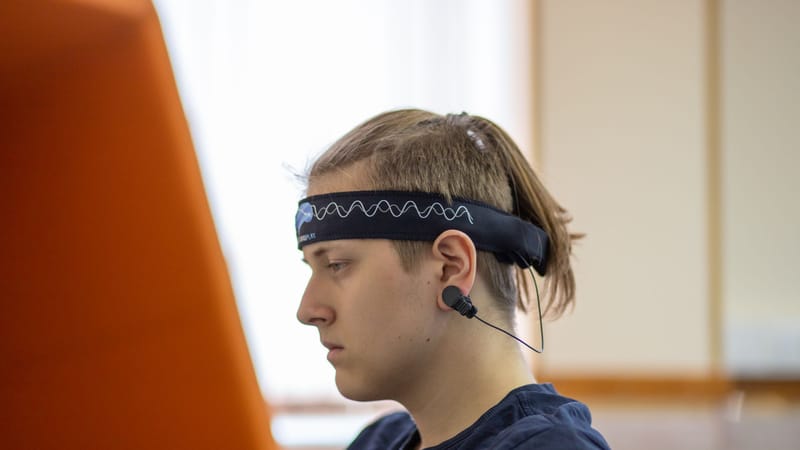
In healthy adults, tDCS shows no reliable effect on memory or thinking, and its studies look underpowered. What trials, clinical guidelines and DIY warnings say.
Practical guide
How to Improve Working Memory: What Works and What Doesn't
How to improve working memory: what training does and doesn't change, how chunking, notes, sleep and lower stress help, and how to practise honestly.