The claim and where it comes from
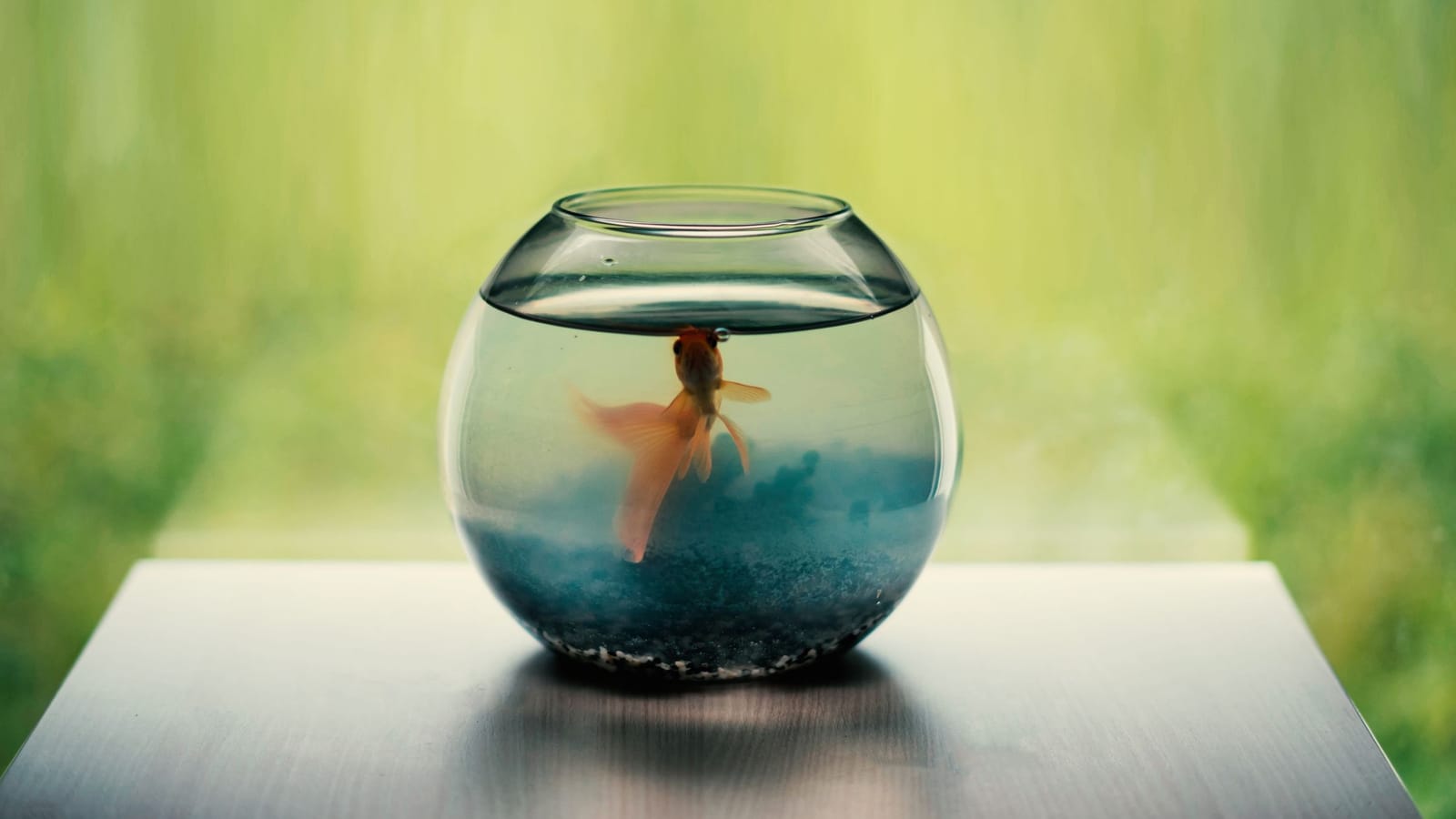
You have probably seen it: the average human attention span fell from 12 seconds in 2000 to 8 seconds now, one second less than a goldfish. The figure has appeared in major newspapers and magazines, in a management book and on the radio, usually as proof that smartphones and social media have broken our ability to concentrate.
In 2017, the BBC's statistics programme More or Less tried to trace it (BBC News, 2017). The references led back to a 2015 report by the consumer insights team of Microsoft Canada, which had surveyed 2,000 Canadians and recorded the brain activity of 112 people doing various tasks. But the attention-span figure did not come from that research. The report cited it to a website called Statistic Brain. Statistic Brain in turn listed sources, including the US National Library of Medicine's National Center for Biotechnology Information and the Associated Press. When the journalist contacted them, neither could find any record of research behind the numbers, and Statistic Brain did not respond. Attention researchers he spoke to had no idea where the numbers came from either.
We searched as well and could not find a peer-reviewed study that measured a human "attention span" of 12 or 8 seconds, or compared it with a goldfish. As far as we can tell, the figure is not a finding. It is a number that was repeated until it sounded like one.
The goldfish half fares no better. A fish-behaviour researcher interviewed for the same programme pointed out that goldfish can perform the kinds of learning described in mammals and birds, and that they have long been used as a model for studying learning and memory formation.
A cousin of the myth: the 10-minute lecture
A related claim says students can only pay attention for 10 to 15 minutes of a lecture. It has shaped real teaching decisions, so it has been checked. A 2007 review of note-taking studies, classroom observations, self-reports and physiological measures found little support for the belief that attention declines after 10 to 15 minutes, and noted that most studies ignored differences between students [4]. A 2016 review reached the same conclusion: the primary data do not support a 10- to 15-minute limit, many studies had methodological flaws, and the most consistent finding was that attention varied more between teachers than between teaching formats [5].
Neither review says attention never fades in a lecture. They say that a fixed, universal limit is not what the evidence shows.
What researchers actually measure
"Attention span" sounds like a property you could read off a stopwatch. Attention researchers rarely use the term, because attention is not one thing and its duration depends on what you are doing. An engrossing film, a dull form and a hard maths problem hold attention very differently for the same person on the same day.
What they measure instead is closer to this:
| What people say | What researchers measure | How |
|---|---|---|
| "My attention span is 8 seconds" | No such measure exists | We found no study behind the figure |
| "I can't concentrate for long" | Sustained attention: keeping performance steady on a monotonous task | Continuous performance tests lasting minutes, scored by accuracy and consistency [1] |
| "Students switch off after 10 minutes" | Attention during lectures | Note-taking, observation, self-report; little support for a fixed limit [4][5] |
| "I keep jumping between apps" | Switching behaviour | Logging how long people stay on one screen or task [2] |
The difference between the second and fourth rows is the heart of this article. One is a capacity: how well you can keep attending when you try. The other is a habit: how often you actually switch, in an environment built to invite it.
Capacity: sustained attention
The largest study of sustained attention across the lifespan tested 10,430 people online with the gradual-onset continuous performance task, in which city scenes slowly fade into one another and you respond to most of them but withhold a response to rare mountain scenes [1]. The analysis separated ability from strategy. Ability peaked in the early 40s and then declined gradually in older adults, while strategy became steadily more cautious with age [1]. These are trajectories across ages in one snapshot, not changes over historical time, but they show what a real measure of sustained attention looks like: minutes of performance, with clear differences between people.
Is that capacity easy to change? A randomised trial compared eight weeks of mindfulness-based stress reduction with an active control programme of the same structure, in 63 community adults [6]. On a continuous performance task, the two groups did not differ in how much their sustained attention improved over time, and the study was powered to detect such a difference [6]. So even a structured eight-week programme aimed partly at attention did not shift this measure beyond what an active control achieved.
Is the capacity shrinking across generations? To show that, you would need the same standard task given to comparable samples over decades. We did not find such a dataset showing a decline. We also did not find one proving stability, so the honest answer is that a historical fall has not been demonstrated, not that it has been ruled out.
Habit: how often we switch
The experience behind the myth is real, but it is mostly about switching. In a study that logged the computer activity of 40 information workers for two working weeks, the median time spent focused on one screen before moving to another was 40 seconds [2]. Shorter focus went with lower self-assessed productivity at the end of the day, and some people seemed more prone to switching than others [2]. This is a small workplace study, and a screen switch is not the same as losing attention: people may move between windows for the same task. Still, it gives a far more grounded picture than a goldfish comparison.
Switching has costs. In a short experiment on interrupted work, people completed interrupted tasks faster and with no loss of quality, but they reported more stress, frustration, time pressure and effort [7]. They compensated for interruptions by working faster, at a price [7]. Our article on multitasking and task switching covers the broader research.
The point is that a habit of switching every few seconds can coexist with an intact ability to sustain attention on a task you care about. Many people who say their attention span is gone can still follow a gripping film or a conversation that matters to them. What has changed is how often their environment offers them something else.
Can habits change attention?
If switching is partly a habit shaped by the environment, changing the environment should help. There is some evidence, with caveats. In a randomised trial with 467 adult iPhone users in the United States and Canada, two weeks of blocking mobile internet, while keeping calls and texts, improved performance on the same gradual-onset continuous performance task, by a modest amount (dz = 0.23) [3]. But only about a quarter of participants kept the block on for most days, the sample was highly motivated, and participants knew what the study was about [3]. More broadly, a systematic review of 21 "digital detox" studies found mixed results, with some positive effects, some null and some negative [8].
This fits the habit-versus-capacity distinction: what you do with your time can nudge measured attention, but the evidence is modest and the big claims of detox programmes are not established. Our articles on dopamine detox vs digital reset and whether your phone reduces brainpower look at this in more detail.
What to take from this
- Drop the number. If someone quotes an 8-second attention span, there is no study to check it against.
- Ask what kind of attention. Sustained attention on a dull task, focus on a meaningful one, and how often you switch are different things. Our guide to selective vs sustained attention explains the terms.
- Look at the environment first. Notifications, open tabs and tasks with no clear next step make switching easy. How to focus better and what is mind-wandering cover what tends to help and why the mind drifts.
- Remember the ordinary causes. In a meta-analysis of short-term total sleep deprivation, the largest effect was on lapses in simple attention tasks [9]; see how lack of sleep affects attention. If you are worried about a lasting change in your concentration, talk to a doctor.
What the research says
What this means at LaserMind
We don't give you an "attention span" in seconds, because no valid measure like that exists. What our exercises offer is practice, with results you can compare only with your own earlier sessions.
Target Watch (Go/No-Go) is a response-control task: letters flash for a quarter of a second, and you press for every letter except X, or only for X. Its five-minute Vigil mode runs the task at an easy pace for about 240 letters and shows your sensitivity in the first and last quarter, which is a simple way to see whether your performance drifts over a few minutes. It is not the gradual-onset task from the studies above, it has no population norms, and it is not a clinical test.
The Deep Work Timer works on the habit side. You name one task, choose 5 to 90 minutes, and tap "I got distracted" each time you notice your attention has left; the clock keeps running. Watching that count over weeks, alongside your focused minutes, tells you more about your switching habits than any headline figure.
Try it on LaserMind
▶ Target Watch (Go/No-Go)Try the five-minute Vigil mode and compare your first and last quarter.
Try it on LaserMind
▶ Deep Work TimerPick one task, set 25 minutes, and count how often you notice yourself switching.
What research has not established
- Our account of the 8-second figure's origin relies on journalism, not a scientific paper; it is the best tracing we found, and we found no study that contradicts it.
- We found no long-term data showing either a decline or stability in sustained attention across decades; absence of a demonstrated decline is not proof of no change.
- The lifespan study was cross-sectional and online, so it compares ages, not the same people over time [1].
- The screen-switching study observed 40 workers for two weeks; switching windows is not the same as losing attention [2].
- The mobile-internet trial had low compliance and a motivated sample [3]; detox studies vary widely [8].
- LaserMind exercises are practice tools with no norms; they do not measure attention span or diagnose attention problems.
Frequently asked questions
Is the average attention span really 8 seconds? No study we could find supports that figure. Journalists traced it to a 2015 marketing report that credited a statistics website, and the sources that website listed had no record of such research.
Do goldfish have a 3-second or 9-second memory? No. Goldfish can learn in the ways mammals and birds do, and they are widely used to study learning and memory.
Are attention spans getting shorter because of phones? A decline in attention capacity over time has not been shown. What has clearly changed is how often people switch between screens and tasks [2]. Changing phone habits modestly improved a sustained-attention task in one trial [3].
How long can a person concentrate? It depends on the task, the person and the situation, which is why researchers measure sustained attention with tasks rather than a single number of seconds [1]. Claims of a fixed 10-minute limit in lectures are not well supported [5].
Can I improve my attention span? You can change the habits and environment that make switching easy, and practise working on one task at a time. Claims that a programme will lengthen your attention span are not established; even eight weeks of mindfulness training did not beat an active control on sustained attention [6].
References
- Fortenbaugh, F. C., DeGutis, J., Germine, L., Wilmer, J. B., Grosso, M., Russo, K., & Esterman, M. (2015). Sustained attention across the life span in a sample of 10,000: Dissociating ability and strategy. Psychological Science, 26(9), 1497–1510. https://doi.org/10.1177/0956797615594896
- Mark, G., Iqbal, S. T., Czerwinski, M., Johns, P., & Sano, A. (2016). Neurotics can't focus: An in situ study of online multitasking in the workplace. Proceedings of the 2016 CHI Conference on Human Factors in Computing Systems, 1739–1744. https://doi.org/10.1145/2858036.2858202
- Noah Castelo, Kostadin Kushlev, Adrian F Ward, Michael Esterman, Peter B Reiner (2025). Blocking mobile internet on smartphones improves sustained attention, mental health, and subjective well-being. PNAS Nexus, 4(2), pgaf017. https://doi.org/10.1093/pnasnexus/pgaf017
- Wilson, K., & Korn, J. H. (2007). Attention during lectures: Beyond ten minutes. Teaching of Psychology, 34(2), 85–89. https://doi.org/10.1080/00986280701291291
- Bradbury, N. A. (2016). Attention span during lectures: 8 seconds, 10 minutes, or more? Advances in Physiology Education, 40(4), 509–513. https://doi.org/10.1152/advan.00109.2016
- MacCoon, D. G., MacLean, K. A., Davidson, R. J., Saron, C. D., & Lutz, A. (2014). No Sustained Attention Differences in a Longitudinal Randomized Trial Comparing Mindfulness Based Stress Reduction versus Active Control. PLoS ONE, 9(6), e97551. https://doi.org/10.1371/journal.pone.0097551
- Mark, G., Gudith, D., & Klocke, U. (2008). The cost of interrupted work: more speed and stress. Proceedings of the SIGCHI Conference on Human Factors in Computing Systems, 107–110. https://doi.org/10.1145/1357054.1357072
- Theda Radtke, Theresa Apel, Konstantin Schenkel, Jan Keller, Eike von Lindern (2022). Digital detox: An effective solution in the smartphone era? A systematic literature review. Mobile Media & Communication, 10(2), 190-215. https://doi.org/10.1177/20501579211028647
- Lim, J., & Dinges, D. F. (2010). A meta-analysis of the impact of short-term sleep deprivation on cognitive variables. Psychological Bulletin, 136(3), 375–389. https://doi.org/10.1037/a0018883