Corsi Block Tapping
Evidence for: spatial span tasks
Blocks light up one after another, and you tap them in the same order, or in reverse for a harder version. It trains spatial span: remembering where things were and in what order. Practice improves this and similar spatial span tasks; carryover to everyday memory has not been established.
Who it suits
A good fit if you
- want a short spatial-memory exercise that fits into 5–10 minutes
- find places and patterns easier than numbers and words; Corsi is the spatial partner of Digit Span
- like a clear number to beat: the longest path you remembered
- prefer a self-paced task; there is no time limit on your answer
Take care or choose something else if
- you are hoping for better everyday memory or school results: research has not shown that span practice does this
- you struggle to tap small targets; a mistap counts and there is no undo
- you are tired or somewhere noisy; each path is shown only once
- you have a medical memory concern: talk to a doctor; a game score is not an assessment
How to practise
- Start with Forward at standard timingNine blocks sit in a fixed, irregular layout. A path lights up one block at a time, a little under a second each, and then you tap the same blocks in the same order. The first path has only 2 blocks.
- Watch the whole path with your hands stillKeep your finger off the screen until the last block has faded. If you trace the path while it plays, you copy it instead of remembering it.
- Give the path a shapeMany people see the path as a simple figure, such as “down in a zigzag, then a jump to the right”, or split it into groups of two or three. A shape is easier to hold than a list of single positions.
- Tap calmly; there is no clockYour answer is checked as soon as you have tapped as many blocks as the path had, and there is no undo. Take a breath, replay the path once in your mind, then tap it in one smooth run.
- Let the ladder set the lengthYou get two tries at each length. If at least one is right, the next path is one block longer; if both are wrong, the run ends. Paths can grow up to 9 blocks.
- Add Backward when Forward feels steadyIn Backward you tap the path from the last block to the first. A useful trick is to start from the last block, which is the freshest, and walk the shape back. Expect a shorter path than in Forward.
- Stay on the page while you playIf you leave the tab during a path, the game pauses, and that path starts again when you resume. A run with an interruption does not count for your personal best.
- Finish with one line of notesWrite down your longest path in each direction and how alert you felt. That is enough to see your trend over a few weeks.
How much and how often
- Per session
- 5–10 minutes: one or two Forward runs and one Backward run. A single run usually takes a few minutes.
- Per week
- 3–4 sessions on separate days.
- When to make it harder
- The length adapts inside each run, so you do not set it yourself. Change the mode instead: add Backward once your forward path is about the same on two different days, and try the faster modes only after that.
A four-week starting plan
- Week 1Forward only, standard timing. Practise watching with your hands still and try one way of grouping the path.
- Week 2Forward as a warm-up, then one Backward run each session.
- Week 3Mostly Backward. Keep one Forward run so you can see both numbers.
- Week 4Same routine. Compare with week 1 in the same mode; if Forward feels easy, try Fast forward once.
A sample session
- 0–1 minSit where you can see the whole board. Read the rule once and choose Forward.
- 1–4 minForward run. Focus on watching the full path before you move.
- 4–5 minShort rest: look away from the screen and note your longest path.
- 5–8 minBackward run. Start from the last block and walk the shape back.
- 8–10 minOne more run in the mode you are working on. Note both longest paths and anything that distracted you.
Forward and backward order: a short example
The letters below label places in a teaching diagram. This is not a standardised test layout. Imagine B, H, then D are shown: forward means that same order; backward means the reverse order, not a mirror image of the board.
| Row | Left | Middle | Right |
|---|---|---|---|
| Top | A | B | C |
| Middle | D | E | F |
| Bottom | G | H | I |
For B, H, D, work out the forward and backward answers before opening the explanation.
Check both orders
Forward: B → H → D. Backward: D → H → B. While the sequence remains visible here, finding the answer is an instruction example, not a memory score.
Compare like conditions
Keep forward and backward modes separate. Record sequence length, presentation speed, device, input, prior exposure, hints and interruptions. Copying a visible sequence is different from answering after it has been hidden. Do not convert this example into a clinical or intelligence score.
For how many things visual working memory can hold and how capacity is measured, read our visual working memory explainer.
Practise this on LaserMind
The web ladder starts at length 2, with two sequences per length. At least one correct advances; two wrong answers at a length, or finishing length 9, ends the round. Keep these rules separate from the teaching diagram and offline practice.
Regular presentation lights each block for 850 ms including fade, followed by a 300 ms gap. Faster-mode records stay separate.
Beginner, intermediate and advanced
Beginner
Forward at standard timing. Goal: watch without moving and tap in one calm run. In Kids mode each block stays lit a little longer.
Intermediate
Forward as a warm-up and Backward as the main task. Work on one strategy at a time, such as grouping or starting from the end.
Advanced
Fast forward and Expert backward: each block shows for 600 ms including the fade, with a 200 ms gap. They keep separate records, so compare each only with itself.
How to track your progress
- Record your longest path for each direction; it is the main number on the result screen, the longest path you got right at least once.
- Compare only with your own earlier runs, in the same mode and on the same kind of device.
- Look at the trend over two to four weeks. One mistap can end a run early, so single days say little.
- Read a longer path as “better at this task”. If you care about everyday spatial memory, such as remembering where you parked, track that separately.
Common mistakes
- Tracing the path with your finger while it playsKeep your hands still until the path ends, then replay it in your mind before tapping.
- Rushing the tapsThere is no time limit and no undo. A calm run beats a fast one with a slip.
- Remembering single blocks instead of the shapeGroup the path into a figure, or into twos and threes. It holds better than a list.
- Jumping to the faster modes too earlyStay with standard timing until your forward path is steady across days.
- Treating your span as a memory scoreYour longest path shows skill on this task. Research has not shown that span gains carry over to everyday memory.
What practice can and can't do
- Getting better at this exercise
- Expected
- Similar tasks (near transfer)
- Sometimes
- IQ, school or work (far transfer)
- Not established
Based on reviews of brain-training research: Simons et al. (2016); Sala & Gobet (2019)
The Corsi block-tapping test is a standard way to measure visuospatial short-term memory: how many positions you can hold, in the right order. Researchers have standardised how it is given and scored, which is why the result is reported as a span, the longest path you get right.
Practising tasks like this does make people better at them. A meta-analysis of working-memory training found reliable short-term gains on working-memory tasks, but those gains did not last well, and there was no convincing transfer to verbal or nonverbal ability, word decoding or arithmetic. That is why LaserMind presents Corsi as practice for this spatial skill, measured against your own earlier results.
What the research says
Last evidence check 2026-10The Corsi block-tapping test is a standard measure of visuospatial short-term memory; this study standardised how it is given and scored. Trained task [1]
A meta-analysis of working-memory training found reliable short-term gains on working-memory tasks, which did not last well, and no convincing transfer to verbal or nonverbal ability, word decoding or arithmetic. Trained & similar tasks [2]
References
- Kessels, R. P. C., van Zandvoort, M. J. E., Postma, A., Kappelle, L. J., & de Haan, E. H. F. (2000). The Corsi Block-Tapping Task: Standardization and normative data. Applied Neuropsychology, 7(4), 252–258. https://doi.org/10.1207/S15324826AN0704_8
- Melby-Lervåg, M., & Hulme, C. (2013). Is working memory training effective? A meta-analytic review. Developmental Psychology, 49(2), 270–291. https://doi.org/10.1037/a0028228
Safety
This is practice, not a memory test or health check. Take a break if your eyes feel strained or you get frustrated, and stop if you feel unwell. If you are worried about changes in your own or a family member’s memory, talk to a doctor.
Frequently asked questions
What is a good Corsi span?
There is no single target here. Your own trend matters more: the same mode, the same kind of device, over a few weeks. Backward is harder, so expect a shorter path there.
Why did my run end so soon?
A run ends when both tries at one length are wrong, and a single mistap can cause that. Look at your trend across several sessions rather than at one run.
Forward or Backward?
Start with Forward. Backward adds reordering on top of remembering, so it is the harder task. Many people use Forward as a warm-up and Backward as the main practice.
Will this improve my everyday memory?
You will get better at this task and at similar spatial span tasks. Research has not shown that this carries over to everyday memory, so track any everyday goal separately.
Related methods
Related reading
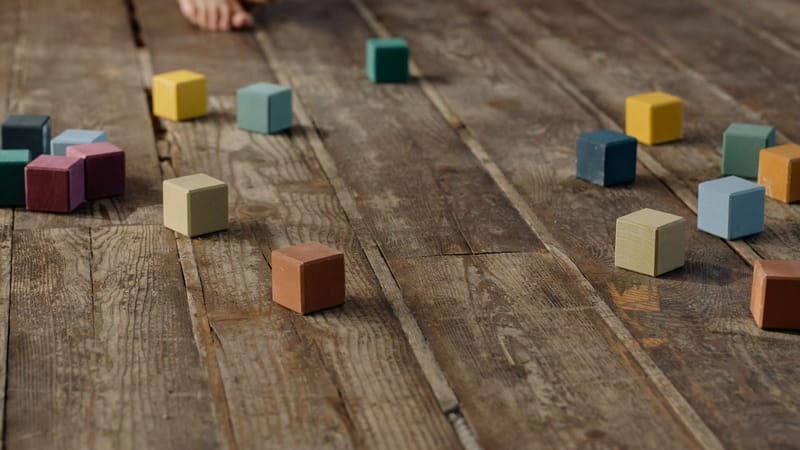
Memory explained
What Does the Corsi Block Test Measure?
The Corsi block test measures how long a path of locations you can hold and repeat: how it differs from digit span and why web scores have no norms.
Practical guide
How to Improve Working Memory: What Works and What Doesn't
How to improve working memory: what training does and doesn't change, how chunking, notes, sleep and lower stress help, and how to practise honestly.
Memory basics
What Is Working Memory? How It Works and Why It Matters
Working memory explained: how it holds and uses information, how much it can hold, how it is measured, and what training research shows.