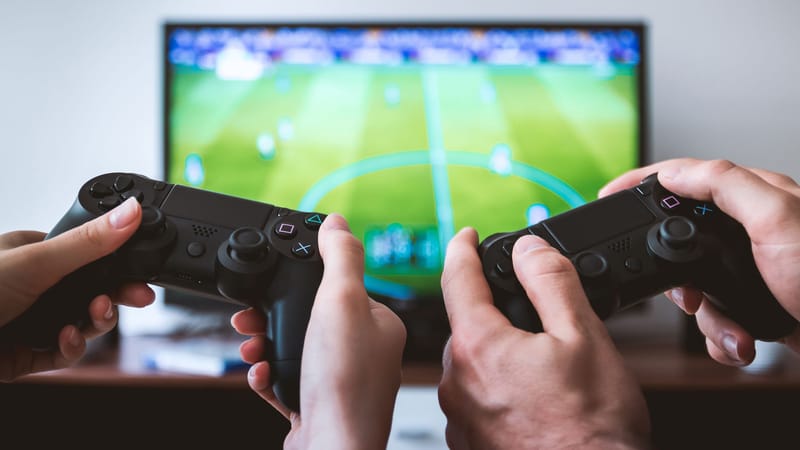
Action Video Game Training
Evidence for: small effects on some skills
Action video games are fast games, such as shooters or racing games, where you track many things at once, switch focus quickly and react under time pressure. Studies that compared them with other games found a small average improvement on cognitive tests, with results varying between studies; a broader review found small or null effects and no evidence that gaming causes better general cognitive ability. If you play, play for enjoyment, in limited sessions, not as a way to train your brain.
Who it suits
A good fit if you
- you are curious why researchers study action games and what they found
- you already play and want an honest picture of what it may and may not do
- you are a parent or teacher weighing up claims about games and attention
Take care or choose something else if
- you hope games will raise grades, IQ scores or work performance: the evidence does not support that
- gaming already cuts into your sleep, school, work or relationships
- you have had seizures, especially ones triggered by flashing light: check with a doctor, and read the game’s photosensitivity warning
- you are choosing a game for a child because it is marketed as brain training
- fast games make you motion sick, very tense or stressed
What to know before you consider it
- Know what counts as an action gameIn research, action games are fast and unpredictable: many moving targets, a wide field of view, quick decisions and constant switching between a broad and a narrow focus. Puzzle, card or life-simulation games are the usual comparison.
- Know how training studies workPeople who rarely play are asked to play an assigned game for a set amount of time over several weeks. They are then compared on lab tests with people who played a different kind of game.
- Tell training studies apart from comparisons of gamersSome studies simply compare regular players with non-players. Differences there may reflect who chooses to play, not what playing does. Training studies with a comparison game are the fairer test.
- Know what the tests measureOutcomes are usually lab tasks of attention, perception and quick decisions, not grades, driving or job performance. Getting better on those tests is a narrow result.
- Expect small effects at mostAverage effects in the better-designed comparisons are small and differ between studies. They are not a good reason to start playing for your brain.
- Read the marketing criticallyGames sold as brain training rarely have trials of their own. Ask what was measured, in whom, and whether it was compared with another game rather than with doing nothing.
- Keep play time-limitedThe studies used limited, scheduled play, not open-ended sessions. If you play, set a time and keep sleep, movement and other activities in balance.
Questions to ask before you try it
- Was this game, or this type of game, compared with another game, or only with doing nothing?
- What exactly improved: a lab test, the game itself, or something in daily life?
- Is the claim about people like me, or about a different group, such as young adults who rarely played before?
- How much time would I spend, and what would I give up for it?
Common misconceptions
- A higher rank means I am smarterIt means you got better at that game. A broad review found no evidence that playing video games causes better general cognitive ability.
- Longer sessions are better trainingThe studied method is limited, time-boxed play. Long sessions mostly cost sleep and other activities.
- Gamers score better on tests, so games caused itPeople who choose to play may differ to start with. Training studies that assign games are the fairer test, and their effects are small.
- A game labelled brain training has been testedMost have not. Treat the label as marketing unless the seller can point to a study of that game.
- The question is settledResults vary between studies, and reviews disagree on how large any effect is.
A meta-analysis of 28 studies that compared action games with other games found that playing action games gave a small average improvement on cognitive tests. Results varied from one study to another.
A broader meta-analysis of video-game training found small or null effects overall, and no evidence that playing video games causes better general cognitive ability. Taken together: possibly a small effect on some cognitive tests, with no sign of a general boost to thinking.
What the research says
Last evidence check 2026-10In 28 studies that compared action games with other games, playing action games gave a small average improvement on cognitive tests, and results varied between studies. Trained & similar tasks [1]
A broader meta-analysis of video-game training found small or null effects overall and no evidence that playing video games causes better general cognitive ability. Other abilities [2]
References
- Bediou, B., Rodgers, M. A., Tipton, E., Mayer, R. E., Green, C. S., & Bavelier, D. (2023). Effects of action video game play on cognitive skills: A meta-analysis. Technology, Mind, and Behavior, 4(1), 28–48. https://doi.org/10.1037/tmb0000102
- Sala, G., Tatlidil, K. S., & Gobet, F. (2018). Video game training does not enhance cognitive ability: A comprehensive meta-analytic investigation. Psychological Bulletin, 144(2), 111–139. https://doi.org/10.1037/bul0000139
Safety
Keep sessions time-limited and take regular breaks for your eyes, hands and posture. Do not let gaming cut into sleep, physical activity, schoolwork or daily responsibilities. If you have had seizures, or a game makes you feel sick, dizzy or very stressed, stop and check with a doctor. If gaming feels hard to control, talk to a health professional.
Frequently asked questions
Should I start playing action games to train my brain?
The evidence does not justify it. Effects are small at most and vary between studies. If you enjoy these games, play them in moderation for fun.
So are video games bad for the brain?
That is a different question from the one on this page. The research summarised here asks whether games improve cognitive tests and finds small or null effects. The main practical risk is playing so much that sleep and activity suffer.
Does LaserMind have anything similar?
Some LaserMind exercises use related skills, such as visual search or switching between rules. They share the same limit: you get better at the task you practise.
What about games for children?
Treat brain-training claims for children with extra caution, keep clear time limits, and talk to a teacher or doctor if you have concerns about attention.
Related methods
ⓘ Learn only
Learn only: this page summarises what the research says. There is no LaserMind exercise for it.