What is response inhibition?
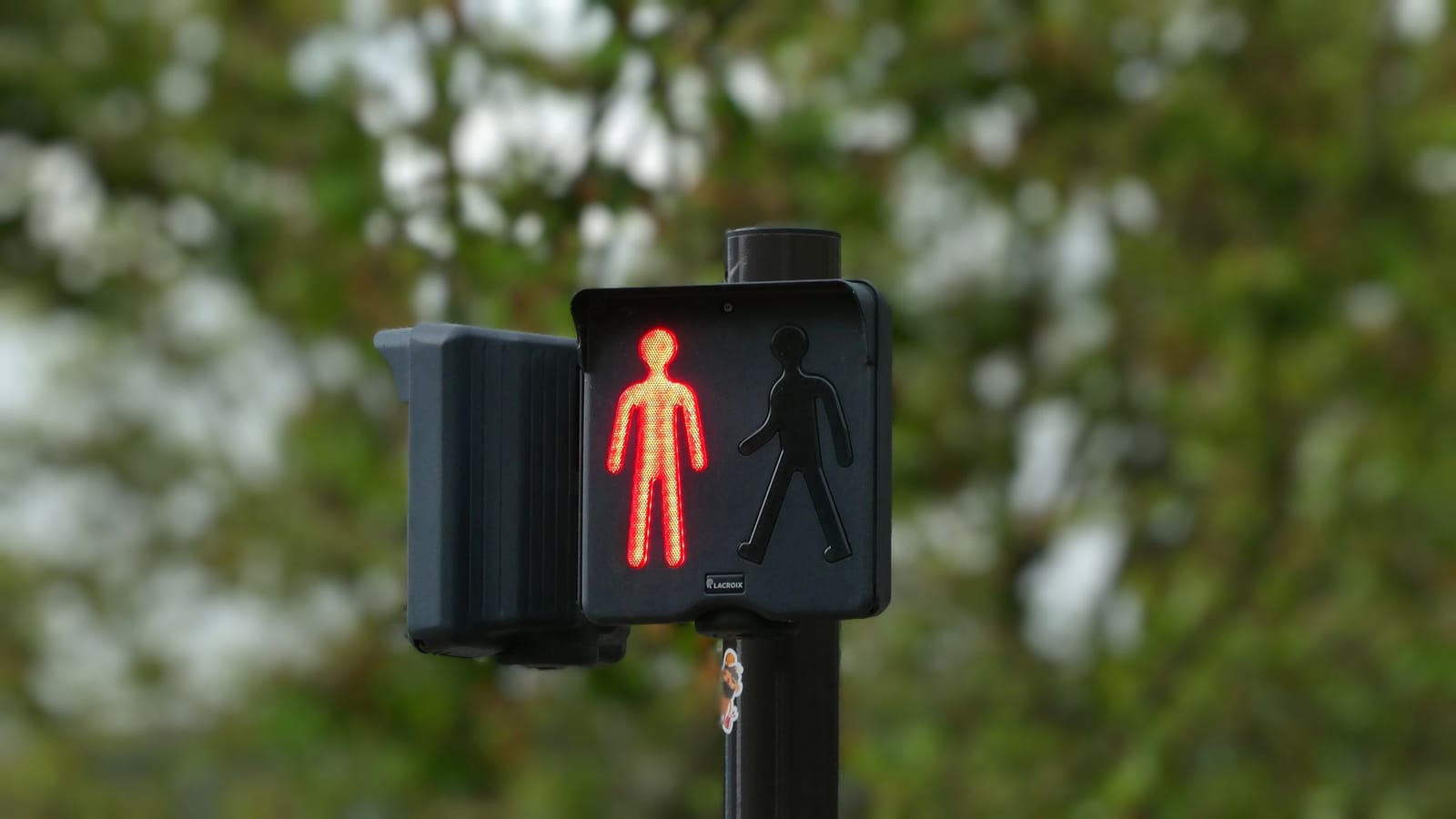
You reach for your phone at a red light, then stop. You start typing a reply, then delete it unsent. A goalkeeper begins to dive, sees the ball change direction and checks the movement. Each time, an action that was ready, or already under way, gets held back.
That is response inhibition: withholding or cancelling a response that would otherwise happen. In a widely cited review of executive functions, it sits within inhibitory control, the ability to control your attention, behaviour, thoughts and emotions so that you do what is more appropriate rather than what habit or a strong pull would have you do [1]. The same review describes self-control as resisting temptations and not acting impulsively, and names the Go/No-Go and stop-signal tasks as two widely used measures of response inhibition [1].
Inhibitory control also includes interference control: keeping irrelevant information, such as a distracting word or a voice across the room, from disrupting what you are doing [1]. The two are related but not the same, and the difference matters when you read a test score.
How it works: stopping a prepared action
Response inhibition is studied with tasks that first build up a strong tendency to respond, then ask you to override it. In psychological terms, the response is prepotent: well practised and ready to fire.
An influential study of 137 college students tested whether executive functions are one ability or several [2]. It measured "inhibition of prepotent responses" with three tasks, the antisaccade, stop-signal and Stroop tasks, alongside tasks for updating working memory and for shifting between rules. The three functions were moderately correlated with one another but clearly separable [2]. In other words, being good at holding back responses goes together to some degree with other executive skills, but it is not the same thing. Our overview of executive functions explains the other two.
The best-developed account of stopping comes from the stop-signal task. It treats stopping as a race between two processes: one that carries the response forward and one that tries to stop it. If the stop process finishes first, the action is cancelled; if the go process wins, you respond anyway [3]. The time the stop process needs cannot be seen directly, so it is estimated from performance as the stop-signal reaction time [3].
Go/No-Go vs stop-signal vs Stroop
The three tasks are often grouped together, but each asks for something different.
| Task | What you do | When the "stop" information arrives | What it mainly measures |
|---|---|---|---|
| Go/No-Go | Respond quickly to frequent "go" items; do nothing on a rare "no-go" item | With the item itself, before you start to respond | Withholding a response; scored by presses on no-go items (commission errors) |
| Stop-signal | Respond to every item, but cancel the response if a signal follows shortly after | After the go signal, sometimes when the response has begun | Cancelling a response under way; scored by stop-signal reaction time |
| Stroop | Name the ink colour of a colour word and ignore what the word says | At once: the conflict is inside the item | Interference control; scored by how much clashing words slow you down |
Go/No-Go. Most trials are "go", so pressing becomes the habit; the occasional no-go item asks you to hold back. In a reliability study, go/no-go sessions had 600 trials with 75% go trials [4].
Stop-signal. On most trials you simply respond. On a minority, a stop signal appears after a short, variable delay. An expert consensus guide recommends stop signals on 25% of trials and a tracking procedure: the delay gets longer after each successful stop and shorter after each failure [3]. Because the signal comes late, the task asks you to cancel a response that may already be on its way, rather than to decide before you start.
Stroop. In the Stroop test, the word RED printed in blue ink should be answered "blue". Here the challenge is less about holding a movement back than about stopping the word's meaning from taking over. The review of executive functions lists the Stroop task among measures of inhibitory control, as part of interference control [1], while the 2000 study used it as one of its three inhibition tasks [2].
Why it matters
Response inhibition is one of the most studied processes in cognitive psychology, partly because its tasks are simple and quick. The consensus guide notes that it is considered important in many neurological and psychiatric conditions and a wide range of behavioural and health problems [3]. That is a reason researchers study it, not a sign that a task score can diagnose anything.
It also shows up in research about everyday distractions. In a preregistered experiment, a visible smartphone made students feel more alert to it and more distracted, and incoming notifications strengthened that feeling, yet none of this was related to their performance on a stop-signal task [8]. Feeling pulled by your phone and losing the ability to stop a response were not the same thing in that study.
Response inhibition also responds to state. In a meta-analysis of brief laboratory stress, stress improved the ability to stop an action (Hedges' g = 0.30), even as it impaired working memory and mental flexibility [9].
What a score can and cannot tell you
Groups versus individuals. A task can show an effect very reliably across a group and still rank individuals poorly. In a study that tested undergraduates twice, three weeks apart, with 600 trials per task, test-retest reliability for go/no-go commission errors was 0.76 in both samples, while stop-signal reaction time ranged from 0.36 to 0.49 depending on how it was calculated [4]. The consensus guide likewise cautions that more trials may not be enough for reliable individual estimates [3].
Tasks versus everyday life. In a study of 522 online participants who did a large battery of self-regulation tasks and questionnaires, the task measures and the questionnaire measures showed little relationship with each other, and the tasks largely failed to predict self-reported real-life outcomes such as drug and alcohol use, health and socioeconomic outcomes [7]. A good Go/No-Go score means you are good at that task.
Willpower. The popular idea that self-control is a reserve that runs down with use has not held up well in large replication studies; our page on whether willpower is a limited resource covers that debate.
Can you train response inhibition?
Practice improves the practised task. Whether it spreads further is where the studies differ.
| Study | Who | Training | What improved |
|---|---|---|---|
| Zhao and colleagues, 2018 | 39 children aged 10–12 and 46 adults aged 18–24 | Adaptive Go/No-Go vs an active control | The trained task and a similar inhibition task with other stimuli, in both ages; short-lived gains in working-memory updating and task switching in children only |
| Enge and colleagues, 2014 | 122 healthy adults | Three weeks of adaptive Go/No-Go and stop-signal training vs non-adaptive versions | No more improvement than practising the easier versions; no conclusive evidence of a real gain |
| Talanow and Ettinger, 2018 | 102 healthy young adults | Three weeks of intensive Stroop practice | Stroop performance only; no transfer to an untrained inhibition task or other executive tasks |
Sources for each row: [5] [6] [10]. The authors of the first study concluded that response-inhibition training shows some potential to enhance aspects of cognitive functioning in children, but not adults [5].
What the research says
Practise it at LaserMind
LaserMind's Go/No-Go test, Target Watch, has two modes. In Hold back on X you press for every letter except X, which appears about 1 in 9 letters across 72 letters; in Catch the X you press only for X, about 1 in 5 of 60 letters. Letters show for a quarter of a second, and you answer with Space, J or the button. Only your first press per letter counts, and presses faster than 150 ms count as errors.
Levels 1–5 shorten the gap between letters, and look-alike letters (K and Y) appear from level 3. After a session with at least 90% correct and few false presses your level goes up; below 75% it goes down. Results show accuracy, hit rate, the rate of presses you should have held, median response time and d′, which measures how well you tell "press" letters from "hold" letters regardless of how often you press. Compare only with your own earlier sessions on the same device. There is also a faster variant (levels 6–7) and a five-minute Vigil variant at an easy pace. The game is not offered in Kids mode.
LaserMind does not have a stop-signal task. For interference control, the Stroop Test shows you how much a clashing word slows you down, with Colour, Reverse and Arrows modes. How to practise either task is in the Go/No-Go method guide and the Stroop training guide.
Try it on LaserMind
▶ Target Watch (Go/No-Go)Play "Hold back on X" once, then look at presses you should have held rather than your speed.
Try it on LaserMind
▶ Stroop ChallengeTry Colour mode to feel the difference between holding back a press and ignoring a word.
What research has not established
- Most studies discussed here used students or young adults [2][4][6]. Results may differ in children, older adults or clinical groups.
- The reliability figures come from long laboratory sessions with 600 trials per task [4]. A short online session is a rougher reading.
- Training studies disagree on transfer, and the positive transfer in one study was short-lived and found only in children [5].
- The study linking tasks with real-life outcomes used an online convenience sample and self-reported outcomes [7].
- LaserMind's Go/No-Go and Stroop tests are practice exercises. They are not standardised, have no population norms and cannot diagnose attention or impulse-control problems.
Frequently asked questions
Is response inhibition the same as impulse control? Not quite. Response inhibition is a narrow, measurable skill: holding back or stopping an action in a task [1]. Everyday impulse control also involves motivation, habits and situations, and task scores relate only weakly to self-reported self-control and real-life outcomes [7].
What is the difference between Go/No-Go and stop-signal? In Go/No-Go, the item itself tells you not to respond, so you can decide before you start. In the stop-signal task, the signal arrives after the go signal, so you have to cancel a response that may already be under way [3].
Is the Stroop test a response inhibition test? It is usually classed as interference control, a neighbouring part of inhibitory control [1], though some studies use it as an inhibition measure [2].
Can an online Go/No-Go test diagnose ADHD? No. Clinical assessment needs standardised tests, norms and a qualified professional, and even laboratory measures of stopping are noisy for individuals [4]. If you are concerned about attention or impulsivity, talk to a doctor.
What the research says
Last evidence check 2026-11-12In children and young adults, adaptive go/no-go training improved the trained task and a similar inhibition task with different stimuli; brief transfer to other skills appeared only in the children. Trained & similar tasks [5]
In a randomised trial of 122 healthy adults, three weeks of adaptive go/no-go and stop-signal training improved those tasks no more than practising non-adaptive versions did, giving no conclusive evidence of a real gain in inhibitory control. Trained & similar tasks [6]
A meta-analysis of studies in children found that training one executive skill (working memory, inhibition or flexibility) improved that skill, but not the other, untrained ones. Trained & similar tasks [11]
References
- Diamond, A. (2013). Executive functions. Annual Review of Psychology, 64(1), 135–168. https://doi.org/10.1146/annurev-psych-113011-143750
- Miyake, A., Friedman, N. P., Emerson, M. J., Witzki, A. H., Howerter, A., & Wager, T. D. (2000). The unity and diversity of executive functions and their contributions to complex "frontal lobe" tasks: A latent variable analysis. Cognitive Psychology, 41(1), 49–100. https://doi.org/10.1006/cogp.1999.0734
- Verbruggen, F., Aron, A. R., Band, G. P. H., Beste, C., Bissett, P. G., et al. (2019). A consensus guide to capturing the ability to inhibit actions and impulsive behaviors in the stop-signal task. eLife, 8, e46323. https://doi.org/10.7554/eLife.46323
- Hedge, C., Powell, G., & Sumner, P. (2018). The reliability paradox: Why robust cognitive tasks do not produce reliable individual differences. Behavior Research Methods, 50(3), 1166–1186. https://doi.org/10.3758/s13428-017-0935-1
- Zhao, X., Chen, L., & Maes, J. H. R. (2018). Training and transfer effects of response inhibition training in children and adults. Developmental Science, 21(1), e12511. https://doi.org/10.1111/desc.12511
- Enge, S., Behnke, A., Fleischhauer, M., Küttler, L., Kliegel, M., & Strobel, A. (2014). No evidence for true training and transfer effects after inhibitory control training in young healthy adults. Journal of Experimental Psychology: Learning, Memory, and Cognition, 40(4), 987–1001. https://doi.org/10.1037/a0036165
- Eisenberg, I. W., Bissett, P. G., Zeynep Enkavi, A., Li, J., MacKinnon, D. P., Marsch, L. A., & Poldrack, R. A. (2019). Uncovering the structure of self-regulation through data-driven ontology discovery. Nature Communications, 10(1), 2319. https://doi.org/10.1038/s41467-019-10301-1
- Johannes, N., Veling, H., Verwijmeren, T., & Buijzen, M. (2019). Hard to Resist?: The Effect of Smartphone Visibility and Notifications on Response Inhibition. Journal of Media Psychology, 31(4), 214–225. https://doi.org/10.1027/1864-1105/a000248
- Shields, G. S., Sazma, M. A., & Yonelinas, A. P. (2016). The effects of acute stress on core executive functions: A meta-analysis and comparison with cortisol. Neuroscience & Biobehavioral Reviews, 68, 651–668. https://doi.org/10.1016/j.neubiorev.2016.06.038
- Talanow, T., & Ettinger, U. (2018). Effects of task repetition but no transfer of inhibitory control training in healthy adults. Acta Psychologica, 187, 37–53. https://doi.org/10.1016/j.actpsy.2018.04.016
- Kassai, R., Futo, J., Demetrovics, Z., & Takacs, Z. K. (2019). A meta-analysis of the experimental evidence on the near- and far-transfer effects among children's executive function skills. Psychological Bulletin, 145(2), 165–188. https://doi.org/10.1037/bul0000180